

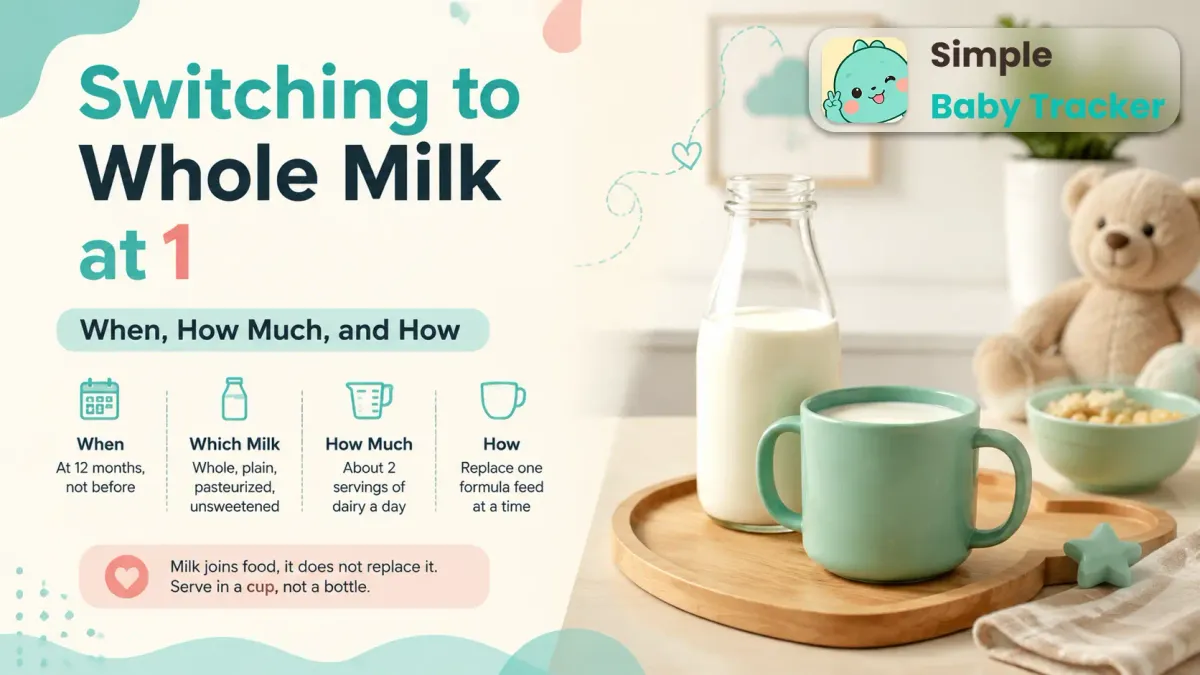
Switching to Whole Milk at 1: When, How Much, and How
By Simple Baby Tracker Editorial TeamBaby Care
When to switch from formula to cow's milk, which milk to buy, how much a toddler needs, and how to make the switch. Based on CDC, NHS, and MedlinePlus guidance.
Key Takeaways
- Switch at 12 months, not before: whole cow’s milk is hard on young kidneys and low on the nutrients babies need.
- Buy plain, pasteurized, unsweetened whole milk. Nothing flavored, nothing raw.
- Switch gradually: replace one formula feed with cow’s milk at a time.
- Milk joins food, it does not replace it: about 2 servings of dairy a day, served in a cup, not a bottle.
The short answer
At 12 months, formula has done its job. Switch to plain, pasteurized whole cow’s milk, one feed at a time, and serve it in a cup alongside meals. From here milk is a side dish, not the main course 1.
| Question | Answer |
|---|---|
| When | At 12 months, not before |
| Which milk | Whole, plain, pasteurized, unsweetened |
| How much | About 2 servings of dairy a day, with meals |
| How | Replace one formula feed at a time; cup, not bottle |
When: 12 months, not before
Before 12 months, whole cow’s milk can put a baby at risk of intestinal bleeding, overloads small kidneys with protein and minerals, and lacks the nutrient balance babies need 2. MedlinePlus draws the same line: no cow’s milk until age 1, because babies under 1 have a hard time digesting it 3.
What about a few weeks early? There is no official grace period. If the birthday is close and the question is pressing, ask the pediatrician rather than rounding down on your own.
Which milk: whole, plain, pasteurized
Buy cow’s milk that is pasteurized, whole, unflavored, and unsweetened. Each adjective earns its place: pasteurized because raw milk can carry bacteria that make a small child very sick; whole because young children need fat for growth and development; unflavored and unsweetened because flavored milks carry added sugars a toddler does not need 2.
One exception to whole milk: if your child is gaining excessive weight or there is a family history of obesity, high cholesterol, or heart disease, ask the doctor which milk to give 2. The NHS adds a UK nuance: whole and semi-skimmed both work as a main drink from age 1, but skimmed and 1% milk should wait until age 5 because they lack calories 4.
How much: about 2 servings of dairy a day
Children aged 12 to 23 months need about 2 servings of dairy daily: milk, full-fat yogurt, cheese, or a fortified dairy alternative 2. A cup of milk at meals plus yogurt or cheese across the week gets there without counting ounces.
Two warnings set the ceiling. Too much milk leaves no hunger for iron-rich foods, and some experts say excess cow’s milk makes it harder for a child’s body to absorb iron from food. So serve milk with meals, not as an all-day sippy cup, and follow hunger and fullness cues the same way you did with formula 2.
How: one feed at a time, in a cup
The CDC’s suggested method is deliberately boring: do it gradually, starting by replacing one infant formula feed with cow’s milk to help your child transition 1.
Serve the milk in a cup, not a bottle. Cup practice should have started around 6 months with an open or free-flow cup, the bottle heads out from age 1, and comfort-sucking from a bottle rots teeth because liquid flows slowly past them 4. Never put a child to bed with a bottle for the same reason 3. If the bedtime bottle is the last one standing, replace it first or last depending on which battle is smaller, but replace it.
Formula, follow-on formula, and toddler or growing-up milks are all unnecessary after 12 months 4. Do not stock both; finishing the formula tub is not a reason to delay the switch.
If you breastfeed: nothing has to change
Breastfeeding can continue as long as both of you want it to; the WHO recommends up to 2 years and beyond 4. A breastfed 1-year-old does not need to switch to cow’s milk at all. If and when you wean, the same milk, same cup, same gradual rules apply.
Milk alternatives and milks to skip
If you use a plant-based drink, only a fortified one counts toward dairy needs, and not before 12 months either. Pick one that is unflavored, unsweetened, and fortified with calcium and vitamin D, since nutrient levels vary by brand, and tell the pediatrician which one you use 2. Rice drinks are out for under-5s because of arsenic levels, while goat’s and sheep’s milk follow the cow’s-milk rule: fine from age 1 if pasteurized, not before 4. Raw or unpasteurized milk of any animal is never on the menu 2.
Log the switch
The transition weeks are exactly when the pediatrician asks detail questions: how many cups of milk, how much solid food, whether appetite for meals dropped. Our formula chart covers the before, our starting solids guide covers the food side, and the feeding tracker logs milk cups next to meals in one tap so the pattern is visible at the 12-month visit.
Frequently asked questions
When can my baby switch to whole milk?
At 12 months, not before. Younger kidneys and guts are not ready for it.
How much whole milk does a 1-year-old need?
About 2 servings of dairy a day across milk, yogurt, and cheese. Milk with meals, not all-day sipping.
How do I switch from formula to cow’s milk?
Gradually: replace one formula feed with cow’s milk at a time.
Can I switch before 12 months if my baby eats lots of solids?
No official grace period exists. Ask the pediatrician rather than rounding down.
Whole milk or low-fat?
Whole, unless the doctor says otherwise for weight or family-history reasons.
Do I need follow-on or toddler milk?
No. Standard formula until 12 months, then cow’s milk or a fortified alternative. Toddler milks add nothing required.
Disclaimer: This article is for informational purposes only and does not constitute medical advice. Every baby is different. Always consult your pediatrician with questions about your baby’s feeding, growth, or health.
Footnotes
-
CDC, “How Much and How Often to Feed Infant Formula,” Infant and Toddler Nutrition, reviewed April 21, 2026. Source ↩ ↩2
-
CDC, “Cow’s Milk and Milk Alternatives,” Infant and Toddler Nutrition, reviewed April 16, 2026. Source ↩ ↩2 ↩3 ↩4 ↩5 ↩6 ↩7
-
MedlinePlus (U.S. National Library of Medicine), “Feeding patterns and diet - babies and infants,” Medical Encyclopedia, reviewed July 1, 2025. Source ↩ ↩2
-
NHS, “Drinks and cups for babies and young children,” reviewed October 5, 2022. Source ↩ ↩2 ↩3 ↩4 ↩5
Keep reading