

How to Select Baby Formula: Safe Newborn Guide for 2026
By Simple Baby Tracker Editorial TeamBaby Care
How to choose baby formula safely: FDA rules, formula types explained neutrally, iron, label reading, preparation, switching, and when to call your pediatrician.
Key Takeaways
- Start with an iron-fortified formula and your pediatrician, not a brand ranking. The AAP recommends iron-fortified formula for all infants who are not breastfed, from birth to one year 1.
- All U.S. infant formulas must meet FDA nutrient requirements. Labels read either “Infant Formula with Iron” or “Additional Iron May Be Necessary” 2.
- Never make homemade formula, never dilute with extra water, and follow the CDC timing rules: use prepared formula within 2 hours of preparation, within 1 hour from the start of a feed, and refrigerate unused prepared formula for no more than 24 hours 34.
- Track tolerance for a few days after any change and call your pediatrician for allergy signs, blood in stool, poor weight gain, or dehydration. Switching decisions belong with your pediatrician.
The short answer
If you need to choose a baby formula today, do this: buy a standard iron-fortified infant formula, prepare it exactly as the label says, and confirm the choice with your pediatrician at the next visit or sooner if your baby has symptoms. That covers safety for most healthy term newborns.
The rest of this guide explains why that default works, what the other types on the shelf mean without ranking them, and how to switch or troubleshoot with your pediatrician. For the amount side of the same question, our formula feeding chart by age covers ounces per feed and feeds per day from newborn to 12 months, and the formula calculator turns your baby’s weight and age into the number directly.
What the FDA requires every formula to contain
U.S. infant formula is regulated as a food under the Federal Food, Drug, and Cosmetic Act, with nutrient specifications at 21 CFR 107.100 and quality control procedures at 21 CFR 106 2. Manufacturers must register with the FDA, meet nutrient minimums and maximums, and follow labeling rules before marketing a new formula.
Three label facts matter when you shop:
- Three physical forms. Powder (mix with water), liquid concentrate (mix with water), and ready-to-feed (no mixing) 2. Nutritionally they follow the same rules. Ready-to-feed is sterile as packaged, while powder is not sterile, which is why preparation steps differ for young or preterm infants.
- Iron statement. Every U.S. formula must be labeled either “Infant Formula with Iron” or “Additional Iron May Be Necessary” 2. The AAP recommends the iron-fortified option for all infants who are not breastfed, or who are only partially breastfed, from birth to one year 1.
- Use By date and storage directions. The label guarantees nutrient content and quality through the Use By date and must explain storage before and after opening 24. Once opened, most powdered containers must be used within one month, stored cool and dry with the lid tightly closed, never in the refrigerator 34.
Low-iron formulas still appear in searches but should not be used as the routine choice. The AAP position is direct: low-iron formulas should not be used, and the amount of iron in iron-fortified formula does not cause constipation or stomach upset 1.
The main types on the shelf, explained neutrally
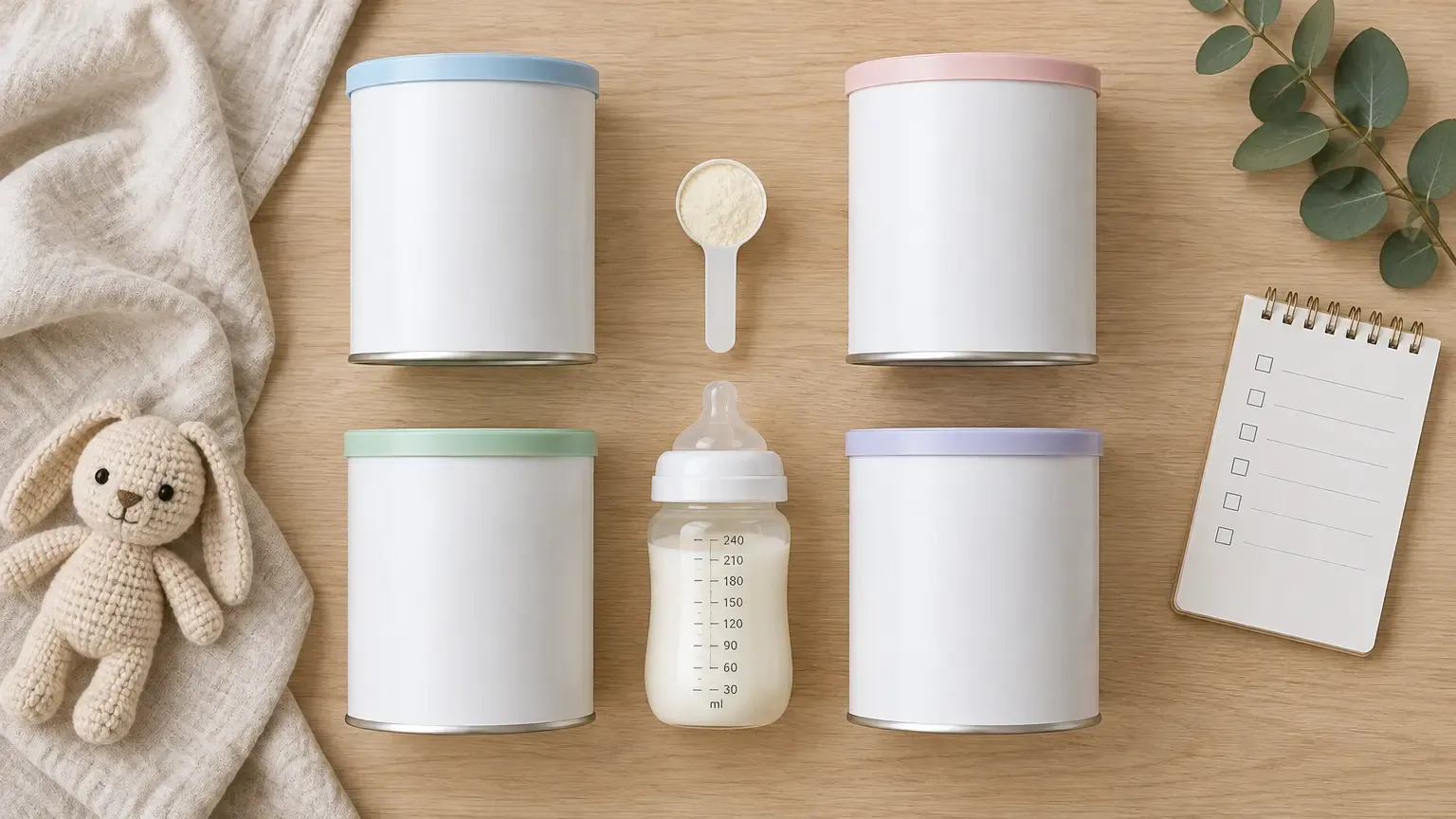
Autocomplete shows the top confusion is types: cow milk based, soy, hydrolyzed or hypoallergenic, and specialty or exempt formulas. This section describes what each term means. It does not rank them, because the right type depends on your baby’s age, health history, and your pediatrician’s advice.
| Term you see | What it means | When doctors usually discuss it |
|---|---|---|
| Cow milk based, iron-fortified | Cow milk protein adjusted for infant nutrition, with added iron | Routine starting point for most healthy term infants 1 |
| Soy based | Soy protein instead of cow milk protein, lactose free | Few routine indications. One example the AAP names is galactosemia, a rare disorder with galactose intolerance 1 |
| Hydrolyzed or extensively hydrolyzed | Cow milk protein broken into smaller pieces | Discussed with your pediatrician when cow milk protein allergy is suspected. Do not self-diagnose from rash or fussiness alone |
| Specialty or exempt | Composition adjusted for specific medical conditions | Prescribed or supervised use only. These may be exempt from some standard labeling and nutrient rules because of their intended medical use 2 |
| Toddler or follow-on products | Marketed for older infants or toddlers | Not a required step. The AAP notes standard infant formula plus age-appropriate foods covers the first year, with plain whole cow milk as an option from 12 months as part of a balanced diet 5 |
Two common follow-up questions deserve direct answers. Organic on the label describes farming practices, not superior infant nutrition under FDA rules. Imported formula bought outside U.S. retail may have different nutrient levels or storage history, and the AAP advises against using imported formula that was not stored or shipped correctly 6.
Step 1: Anchor on age and feeding context
Newborns start small and frequent. Formula-fed newborns usually take 2 to 3 ounces per feed every 3 to 4 hours in the first days, reaching at least 4 ounces per feed by the end of the first month 7. After that, a planning estimate many pediatricians cite is about 2.5 ounces of formula per day for every pound of body weight 78. It is a starting range, not a prescription. Growth, hunger cues, and your pediatrician set the exact numbers.
If your baby is preterm, under 2 months old, or immunocompromised, preparation matters more than brand. Use extra precautions below and ask your pediatrician whether ready-to-feed is preferable for the first weeks, since it is sterile as packaged 3.
Our newborn feeding guide pairs amounts with hunger and fullness cues, and our newborn schedule by week shows how feeding rhythm looks across the first month.
Step 2: Read the label the same way every time
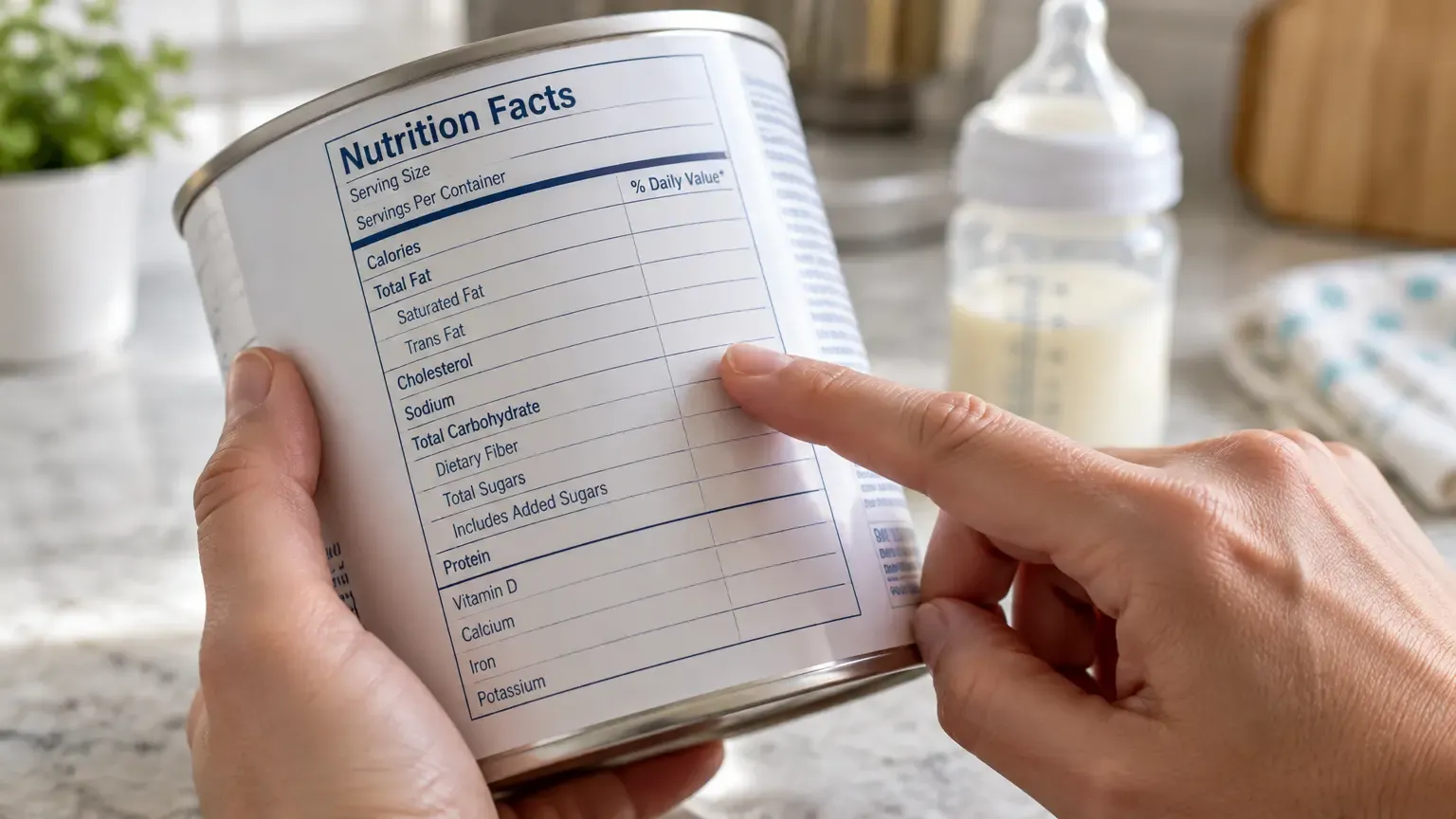
Check four items before the can goes in the cart and again before each preparation:
- Infant formula statement and iron line. Confirm it says infant formula and “with Iron” if your pediatrician recommended iron-fortified 21.
- Use By date and container condition. Do not buy or use dented, puffy, rust-spotted, or expired containers 3.
- Preparation ratio. Note the exact water-to-powder ratio. Always measure water first, then add powder with the provided scoop 34.
- Storage and discard lines. Note the opened-container life (often one month) and the prepared-bottle limits (2 hours from preparation, 1 hour from start of feeding, 24 hours refrigerated) 34.
Write the opening date on the lid when you open a new container. That single habit prevents most expired-powder mistakes.
Step 3: Prepare and store it safely

Powdered formula is not sterile. Follow CDC and FDA steps exactly 34:
- Wash hands with soap and warm water. Clean counters and use a clean bottle and nipple.
- Use water from a safe source. If you are unsure about tap water, contact your local health department. For infants under 2 months, preterm infants, or infants with weakened immune systems, boil water, let it cool about 5 minutes, then mix 3.
- Measure water first, then add the exact powder amount from the label. Never add extra water to stretch formula. Too much water lowers nutrition and can slow growth, while too little water strains kidneys and digestion and can dehydrate 4.
- Cap and shake to mix. Do not stir with unclean utensils.
- No microwave warming. Microwaves heat unevenly and can burn the mouth and throat. If warming, place the capped bottle under running warm water or in a bowl of warm water, then test a few drops on the inside of your wrist 3.
- Use quickly or store safely. Use within 2 hours of preparation and within 1 hour from when feeding begins. Refrigerate promptly if not used within 2 hours and use within 24 hours. Discard leftover formula in the bottle after a feed. Do not save it 34.
The AAP adds a plain warning worth repeating: do not feed homemade formula. Homemade recipes have not been evaluated by the FDA, may lack essential nutrients, and have led to hospitalizations for nutritional and electrolyte problems. Contamination from a home kitchen can cause serious illness 6. The same applies to plain cow milk, plant milks, or diluted formula as substitutes before one year.
Step 4: Run a calm trial and know when to call

After starting or changing a formula with your pediatrician’s knowledge, watch for 2 to 3 days and log feeds, ounces, spit-up, stool, rash, and weight if you have a scale routine. Short-term gassiness or a stool texture change can occur during transitions. Stop and call your pediatrician promptly for repeated vomiting, blood or mucus in stool, hives or swelling, wheezing, poor weight gain, fewer wet diapers, unusual sleepiness, or signs of dehydration.
Do not interpret normal newborn patterns as formula failure on day one. Our formula-fed poop guide explains the wide normal range for frequency and texture, and when color or consistency warrants a call. Logging ounces for a few days turns vague worry into concrete numbers. Our feeding tracker records a bottle with one tap.
Step 5: Switch only with a reason and a method

Autocomplete ranks switching questions near the top: can I change, how to switch gradually, how long do side effects last. Valid reasons to discuss a switch include a diagnosed intolerance or allergy, persistent intolerance symptoms your pediatrician confirms, availability or WIC coverage changes, or moving between forms (powder to ready-to-feed) for travel or preterm precautions.
When your pediatrician agrees on a switch:
- Confirm the target type and the transition pace. Gradual mixing across several days is the common approach unless your pediatrician advises an immediate change for medical reasons.
- Keep the ratio exact during mixing. Do not dilute either formula.
- Expect a short adjustment window and keep logging. If diarrhea, rash, vomiting, or refusal persists beyond the window your pediatrician gave, call back rather than switching again on your own.
- Do not stack changes. One variable at a time keeps cause and effect readable.
At 12 months, the next transition is off formula, not to another formula. The AAP supports plain whole cow milk from 12 months as part of a balanced diet for most toddlers, with no need to detour through toddler formulas 5. Our switching to whole milk guide covers the gradual one-feed-at-a-time method.
Common mistakes to avoid
Starting with a specialty type without medical reason. Hydrolyzed or soy formulas solve specific problems. For a healthy term infant they add cost and complexity without benefit. Let your pediatrician match type to diagnosis.
Making or importing formula outside U.S. retail safety nets. Homemade recipes, diluted bottles, and improperly stored imports carry nutrient and contamination risks the FDA and AAP warn against explicitly 26.
Diluting to save money or over-concentrating to help growth. Both directions can make a baby sick. If cost is the pressure, read our food assistance and formula guide and talk to your pediatrician or WIC office before changing ratios.
Warming in the microwave or saving leftover bottles. Uneven hot spots burn, and saliva plus formula grows bacteria quickly. Follow the 2-hour, 1-hour, and 24-hour limits every time 34.
Chasing reflux, gas, or constipation with repeated unsupervised switches. These symptoms have many causes. One guided trial with logs beats three rapid brand changes.
Frequently asked questions
How do I choose baby formula for a newborn?
Choose a standard iron-fortified infant formula, prepare it exactly as labeled, and confirm with your pediatrician. Most healthy term newborns start at 2 to 3 ounces per feed every 3 to 4 hours 7. If your newborn is preterm or under 2 months, ask about ready-to-feed and boiled-water precautions 3.
Are all baby formulas the same?
They follow the same FDA nutrient rules but differ in protein source, form, and medical purpose 2. That is why labels and preparation steps differ even when nutrition panels look similar. Type matters only when a medical reason points to it.
Does iron-fortified formula cause constipation or black stool?
The AAP states the iron amount in formula does not contribute to constipation or upset stomach 1. Darker stools can occur with iron intake. Persistent hard stools, straining, blood, or poor feeding still warrant a pediatrician call.
How do I know if my baby is allergic to formula?
Look for repeated vomiting, hives or swelling, wheezing, blood or mucus in stool, eczema flares tied to feeds, or poor weight gain, and call your pediatrician promptly. Do not diagnose cow milk protein allergy from a single fussy evening. Hydrolyzed or specialty options are medical decisions, not shelf experiments.
How do I switch baby formula safely?
Switch for a clear reason, confirm the target with your pediatrician, transition gradually unless told otherwise, keep ratios exact, and log for several days. If vomiting, diarrhea, rash, or refusal persists beyond the window your pediatrician set, call back before switching again.
Can I make baby formula at home or dilute it?
No. The FDA advises against homemade formula because untested recipes can lack essential nutrients and carry contamination risks 2. The AAP reports hospitalizations after homemade use 6. Never add extra water. If cost or supply is the issue, seek help through your pediatrician, WIC, or local assistance before changing the recipe.
Conclusion
Selecting formula is a short decision with a long safety tail. Pick iron-fortified, read the four label lines, prepare water-first with exact ratios, respect the time limits, and let your pediatrician resolve allergy or switching questions. Keep the formula feeding chart for amounts, the poop guide for normal ranges, and the whole milk guide for the 12-month exit.
Disclaimer: This article is for informational purposes only and does not constitute medical advice. Every baby is different. Always consult your pediatrician with questions about feeding, growth, allergy symptoms, or formula changes.
Footnotes
-
AAP, George J. Fuchs III, MD, FAAP and Steven A. Abrams, MD, FAAP, “Choosing a Baby Formula,” HealthyChildren.org. Source ↩ ↩2 ↩3 ↩4 ↩5 ↩6 ↩7
-
FDA, “Infant Formula Information for Parents and Caregivers,” U.S. Food and Drug Administration, content current as of February 26, 2026. Source ↩ ↩2 ↩3 ↩4 ↩5 ↩6 ↩7 ↩8 ↩9 ↩10
-
CDC, “Infant Formula Preparation and Storage,” Infant and Toddler Nutrition, reviewed May 14, 2026. Source ↩ ↩2 ↩3 ↩4 ↩5 ↩6 ↩7 ↩8 ↩9 ↩10 ↩11 ↩12
-
FDA, “Handling Infant Formula Safely: What You Need to Know,” U.S. Food and Drug Administration, May 17, 2024. Source ↩ ↩2 ↩3 ↩4 ↩5 ↩6 ↩7 ↩8 ↩9
-
AAP, “Older Infant-Young Child Formulas,” Pediatrics, October 2023. Source ↩ ↩2
-
AAP, “Do not feed homemade formula to babies; seek help instead,” AAP News, February 25, 2019. Source ↩ ↩2 ↩3 ↩4
-
AAP, Amy Lynn Stockhausen, MD, FAAP, “How much formula does my baby need?” HealthyChildren.org. Source ↩ ↩2 ↩3
-
MedlinePlus (U.S. National Library of Medicine), “Infant formulas,” Medical Encyclopedia. Source ↩
Keep reading