

Diaper Rash: What It Actually Is, What It Isn't, and What the Evidence Says
By Simple Baby Tracker Editorial TeamBaby Care
Only about 4 in 10 rashes in the diaper area are ordinary diaper rash. What the 300-case data show, why folds and satellite spots change treatment, and what the trials say about cloth diapers, wipes, and talc.
Key Takeaways
- “Diaper rash” is an umbrella term, not a diagnosis. In a prospective study of 300 consecutive rashes in the diaper area, only 41.7% were irritant diaper dermatitis. Another 33.7% were rashes the diaper made worse but did not cause, and 24.7% had nothing to do with the diaper at all 1.
- The single most useful rule in that study: if there are skin lesions anywhere else on the body, the odds shift hard toward something other than diaper dermatitis — 77.0% versus 0.8% 1.
- Two signs change what you do. Satellite pustules at the edge of a rash mean candida, which needs an antifungal. Folds that are involved suggest infection; ordinary irritant dermatitis tends to spare the folds 23.
- The cloth-versus-disposable debate rests on studies Cochrane judged too methodologically flawed to pool at all. A 2024 study of 1,389 families found no difference in rash frequency 42.
- Talcum powder was an independent risk factor for diaper rash in a 1,153-child study, and night changes mattered more than daytime changes 5.
- “Frosting a cake” is the actual clinical instruction: thick zinc oxide, not rubbed in, not removed at every change 6.
What “diaper rash” is actually a name for
The phrase covers a location, not a disease. It describes inflammation anywhere the diaper sits — and the diaper area is a uniquely hostile piece of real estate: warm, occluded, wet, and in contact with urine, faeces, and friction several times a day.
Most parents assume that when the skin under a diaper turns red, the diaper caused it. Usually that is right. But “usually” is doing less work than the label suggests, and the gap between the label and the diagnosis is where the mistakes happen.
The American Academy of Pediatrics puts the baseline plainly: at least half of all babies get a diaper rash at some point. Red, inflamed skin in the diaper area is also one of the most common reasons parents bring a baby to the doctor 7. Reported prevalence ranges from 7% to 35%, with some studies reaching 50%, and the peak incidence falls between 9 and 12 months 8. It is not evenly distributed: published figures include 10–20% in the United States, 36% in Thailand, 14.9% in Germany, 25% in Japan, and 67% in Turkey 8.
The mechanism, minus the ammonia story
The popular explanation is “ammonia burns the skin.” That is not the accepted mechanism, and it leads people to the wrong fix.
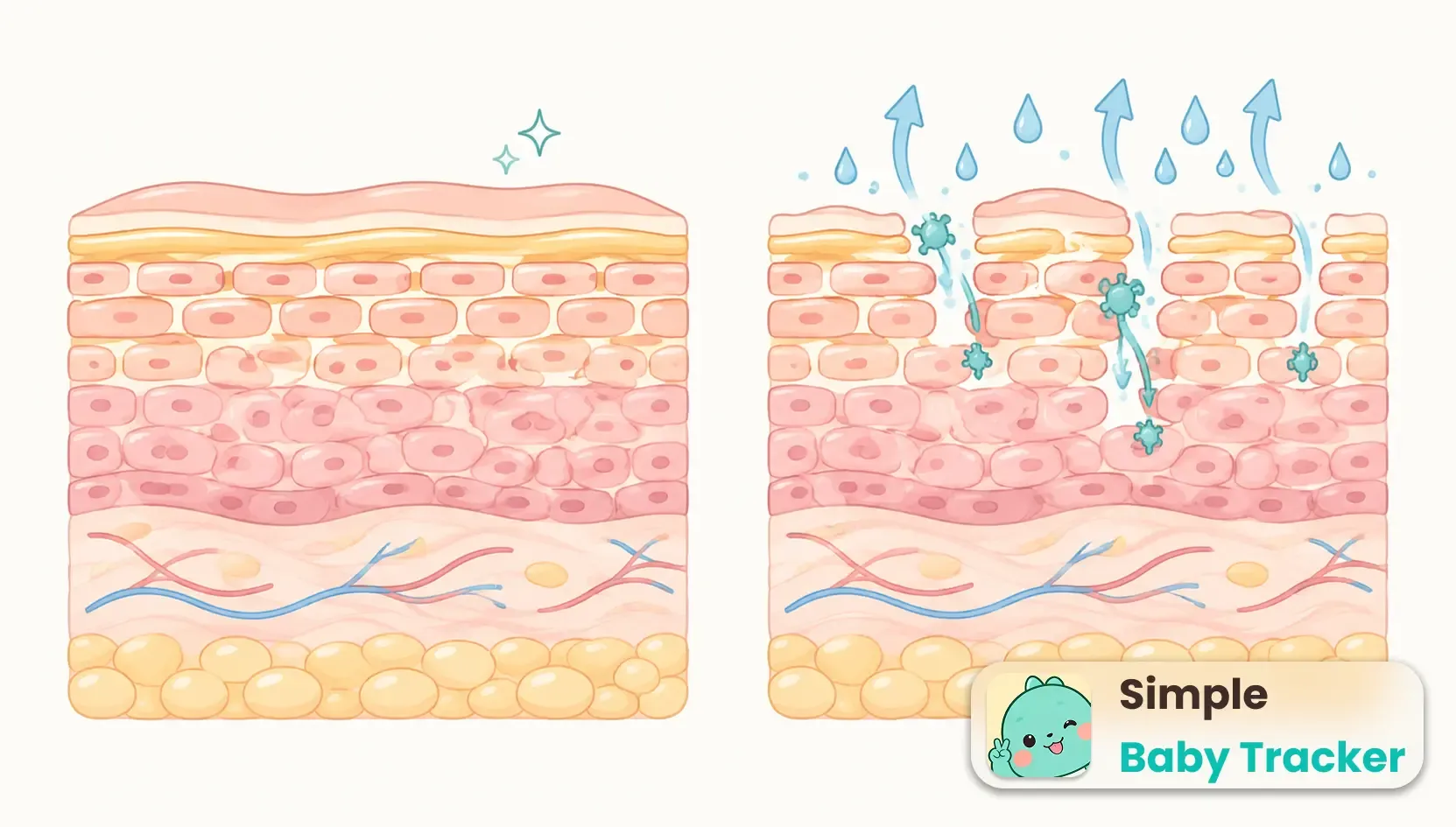
What the clinical literature describes is a chain of events. When urine and faeces interact under a nappy, ammonia production rises, which raises skin pH. The higher pH weakens the skin’s barrier function, leaving it more vulnerable to the protein- and fat-digesting enzymes in faeces. Add prolonged wetness, softened skin, and friction, and you have the conditions for irritant dermatitis 3. A separate review puts it the same way: moisture raises skin pH and enzyme activity, disrupts normal skin flora, and breaks down barrier integrity 9.
Two practical consequences follow, and neither is intuitive.
First, the enzymes are the aggressor, not the ammonia. Diarrhoea is therefore a major risk multiplier, because faster gut transit means more active faecal proteases and lipases. Children with diarrhoea, or after ostomy takedown or colon surgery, run a considerably higher risk of severe diaper dermatitis 8.
Second, friction is a real contributor, not a side issue. It is listed as a distinct causal factor alongside moisture and irritants, and it comes from cleaning, from the nappy itself, and from movement once a baby is mobile 3. That is why “wipe harder to get it clean” backfires.
The 300-case reality check
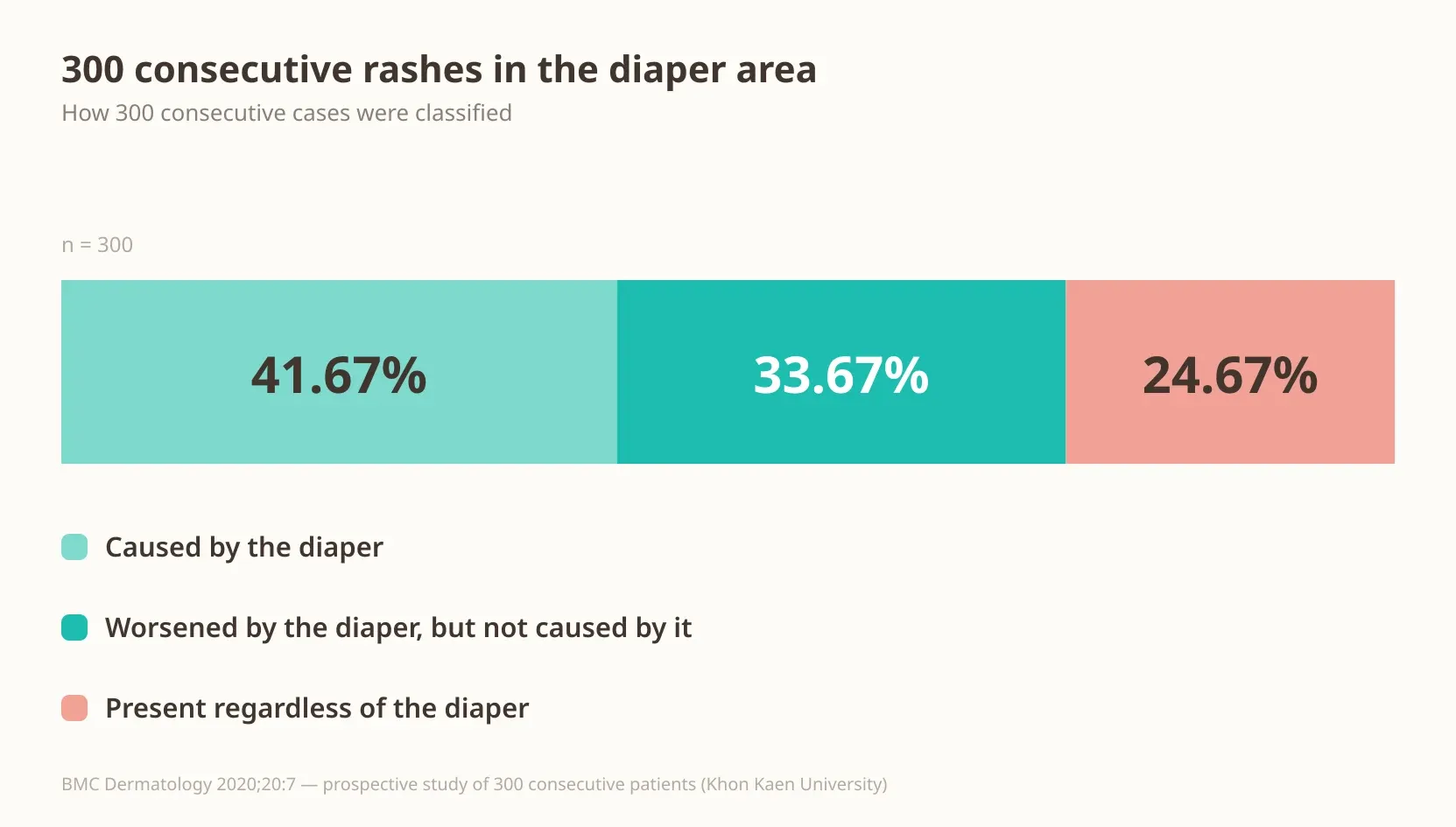
This is the part most diaper rash articles skip. This was a study that followed 300 patients in a row who came to a specialist children’s hospital with a rash in the diaper area. A paediatric dermatologist diagnosed each one, using tissue staining, blood tests, and pathology where needed 1.
Only 41.7% had irritant diaper dermatitis. Grouped by cause:
| Group | Share | What it means |
|---|---|---|
| Caused by the diaper | 41.7% | Irritant diaper dermatitis — and this was the only diagnosis in the group 1 |
| Made worse by the diaper, not caused by it | 33.7% | Skin-fold rash (intertrigo), candida, seborrhoeic dermatitis (the condition behind cradle cap), psoriasis, impetigo (a bacterial infection) 1 |
| Present regardless of the diaper | 24.7% | Eczema, haemangioma (a birthmark), hand-foot-and-mouth disease, zinc deficiency, staphylococcal scalded skin syndrome, Langerhans cell histiocytosis, scabies, and more 1 |
The individual diagnoses in that third group are the ones that get missed. Ranked by frequency in the same study 1:
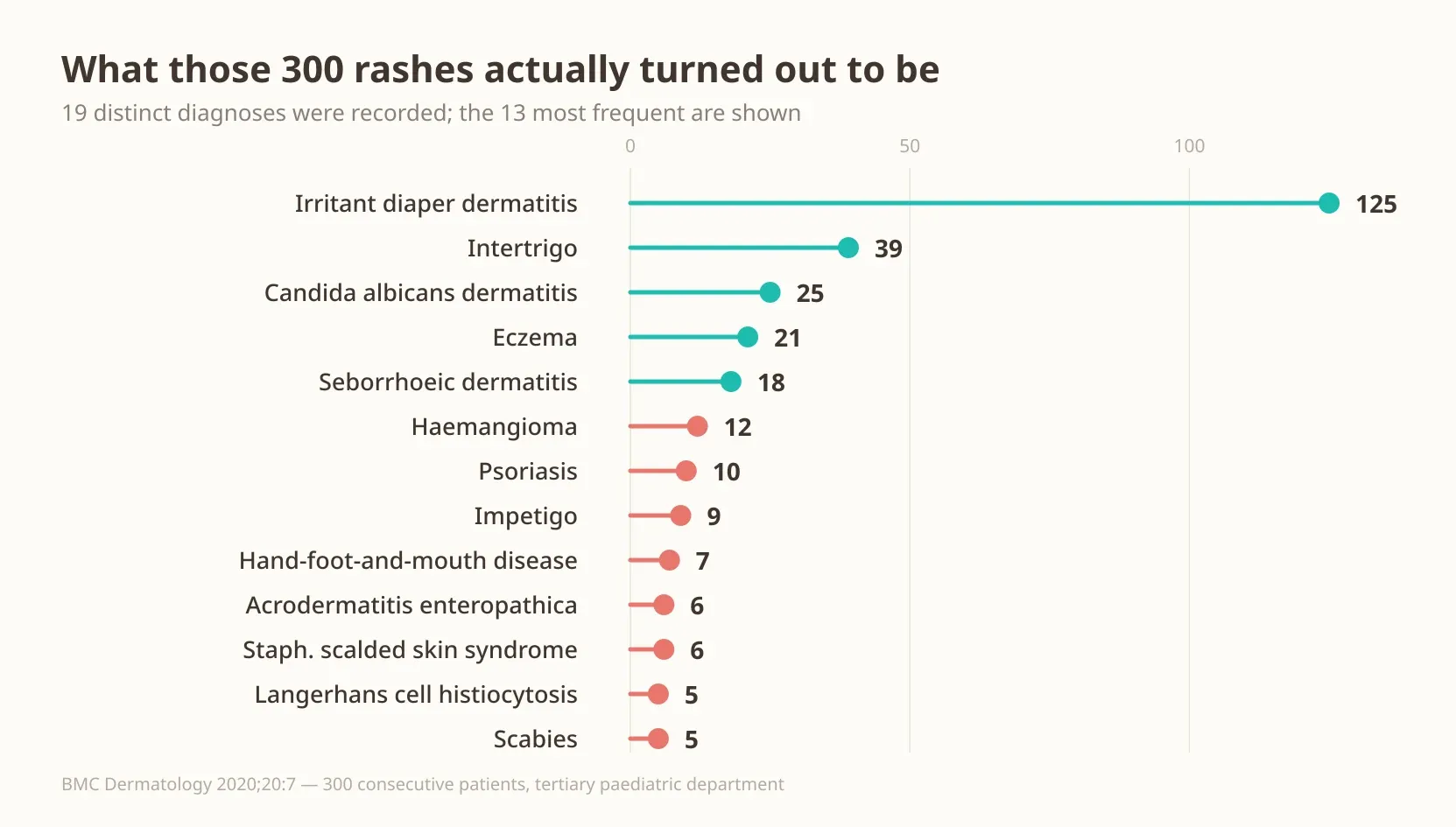
The study’s own case notes show why this matters. One patient was treated for irritant diaper dermatitis for a month before a dermatologist diagnosed an ulcerated infantile haemangioma (a type of birthmark); it improved within a month of oral propranolol 1. Another presented with what looked like diaper rash and turned out to be hand-foot-and-mouth disease — diagnosed only after lesions appeared on the palms, soles, and lips that had not been visible at the first examination 1. A third had a rash that was superficially similar to irritant dermatitis, but close inspection found tiny bleeding spots; that clue led to a diagnosis of Langerhans cell histiocytosis, confirmed by biopsy 1.
None of those were rare enough to be a curiosity. In 300 consecutive cases, they happened.
The one question that changes everything
If you take a single practical rule from that study, take this one. The researchers looked for factors that distinguished systemic disease from ordinary diaper dermatitis, and one stood out sharply: the presence of skin lesions at other sites on the body.
Among rashes present regardless of the diaper, 77.0% had concurrent lesions elsewhere. Among irritant diaper dermatitis, 0.8% did. The difference was significant at P < 0.001 1.
The clinical implication is unglamorous and easy to act on: when a rash appears in the diaper area, look at the rest of the baby. Scalp, armpits, behind the ears, palms, soles, mouth. The authors put it directly — a complete physical examination for lesions at other sites should be conducted to avoid misdiagnosis 1.
Reading the rash: folds and edges
Two physical findings do most of the diagnostic work.
Satellite lesions mean candida
Candida diaper dermatitis is the third most common diagnosis in the diaper area, at 8.33% in the 300-case series. It appears as widespread red patches with small separate spots scattered around the outer edge — the “satellite” lesions 1. A UK neonatal clinical guideline describes the same thing from the treatment side: a bright red rash with satellite lesions or pustules at the margins, which may extend into the groins and skin folds 3.
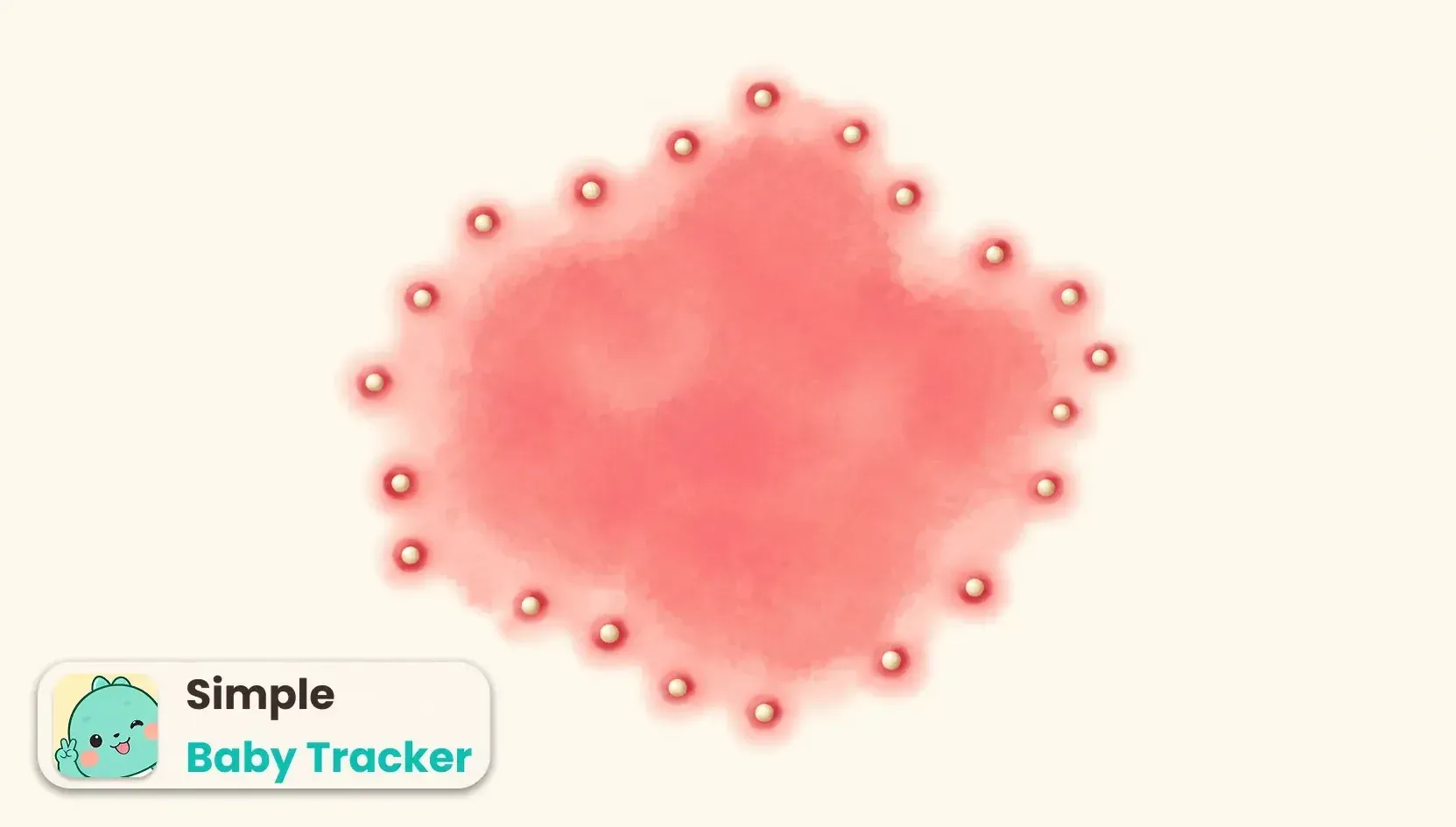
That single visual feature separates a rash that needs an antifungal from one that needs a barrier cream. It is worth knowing before you reach for a tube.
Folds tell you whether infection is involved
Ordinary irritant diaper dermatitis affects the convex surfaces — the skin that presses against the diaper. A 2024 study describes the distribution as redness around the anus, the vulva, and the thighs, often sparing the groin creases 2. The NHS guideline states the inverse as a rule: if skin folds are involved, consider infection 3.
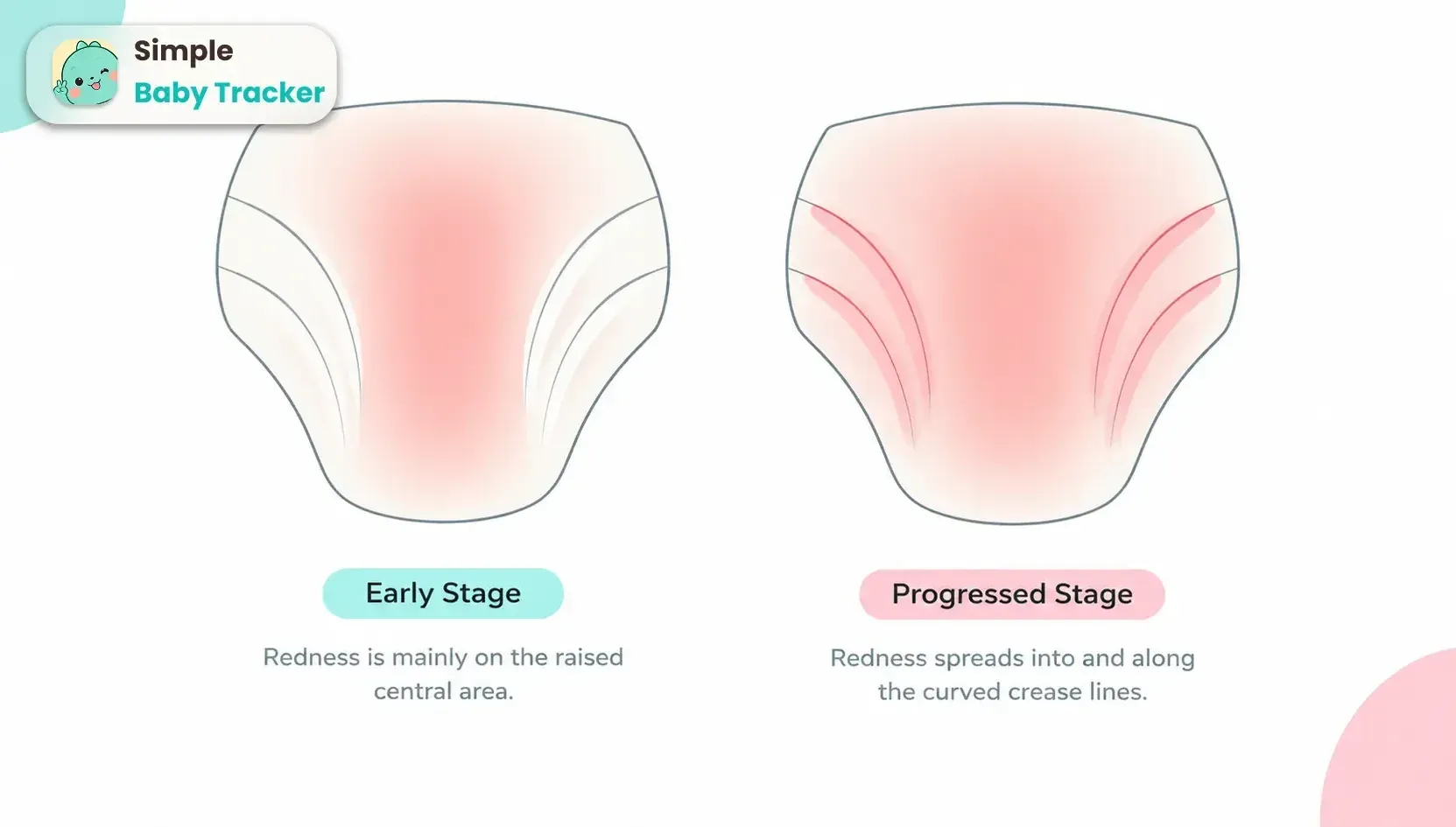
So: redness on the raised surfaces, folds clear, is the classic irritant picture. Redness that has crept into the creases, or that has satellite spots, points somewhere else.
Putting the whole article’s diagnostic logic in one place:
| What you see | What it most likely means | What to do |
|---|---|---|
| Red on the convex surfaces, folds clear, no spots at the margin | Irritant diaper dermatitis | Frequent changes, thick zinc oxide barrier, no scrubbing 23 |
| Bright red spreading into the folds, satellite pustules at the margin | Candida | Needs an antifungal — clotrimazole 1% three times daily for up to 3 weeks, continued after symptoms resolve 3 |
| Rash plus lesions on the scalp, armpits, palms, or soles | Something other than diaper dermatitis | Examine the whole body, then see a clinician 1 |
| Rash plus diarrhoea and hair loss | Possible zinc deficiency | Ask for zinc to be assessed 1 |
| Rapidly spreading, tender, with fever or blistering | Possible bacterial infection or scalded skin syndrome | Same-day medical care 61 |
| No improvement after 48–72 hours of correct barrier care | The diagnosis is wrong, not the cream | Escalate to a clinician 3 |
When it isn’t diaper rash at all
The 300-case study found a set of conditions that present in the diaper area and can be mistaken for irritant dermatitis 1. A few are worth recognising by name, because the consequence of missing them is measured in months.
Zinc deficiency (acrodermatitis enteropathica). Six cases in the series, 2%. The classic trio is a rash, diarrhoea, and hair loss. The tell is where the rash sits: in the diaper area plus the armpits, hands, and feet. In the reported case, the baby had diarrhoea before any skin signs appeared, and also had hair loss. Diagnosis was supported by a low level of alkaline phosphatase, an enzyme that depends on zinc; the diarrhoea and the rash improved dramatically after one week of zinc supplements 1. A diaper rash that will not heal, in a baby with diarrhoea and hair loss, is a reason to check zinc — not to try another cream.
Langerhans cell histiocytosis. Five cases, 1.67%. The clue was tiny bleeding spots within the rash 1.
Staphylococcal scalded skin syndrome. Six cases, 2% 1. A rapidly spreading, tender rash with systemic illness is a same-day medical problem.
Hand-foot-and-mouth disease. Seven cases, 2.33%. It can present first as a diaper-area rash; the palms, soles, and mouth lesions may follow 1.
Streptococcal infection around the anus, and impetigo. Nine cases of impetigo — a bacterial skin infection — 3% in the series 1. Sharply outlined redness around the anus, in a child who is unwell or in pain, is not a barrier-cream problem.
None of this is a reason to panic about a red bottom. It is a reason to know the exit criteria — the features that mean the standard routine is the wrong routine.
What actually works
Change the nappy, and change it at night
This is the intervention with the clearest support and the least glamour. The AAD’s first instruction is to change dirty diapers as soon as possible — even if they are only wet — because it reduces the moisture that inflames the rash 6. The NHS guideline is blunter: change frequently and as soon after soiling as possible, and do not leave an infant in a soiled nappy even if they are sleeping 3.
The night point is the counterintuitive one. In a cross-sectional study of 1,153 Thai children, changing fewer than three times per night was an independent risk factor — roughly 3.7 times the risk 5. Changing fewer than three times during the day was not. The authors’ conclusion is unambiguous: more frequent daytime changes cannot compensate for fewer changes at night 5.
Apply a barrier, thickly, and leave it there
The AAD recommends a zinc oxide diaper cream, especially when the skin stays red between changes. For a severe rash, the instruction is to “layer it on like you are frosting a cake.” And here is the detail most parents get wrong: there is no need to remove the cream at each change. It can be fully removed once, at the end of the day 6.
The NHS guideline adds a severity ladder. For treatment, a water-impermeable cream or ointment at each change. Yellow soft paraffin is considered safe in neonates. For higher-risk babies or moderate-to-severe dermatitis, a paste containing a water-impermeable substance, because pastes protect better against moisture 3.
Clean gently, and dry the creases
Use water and a soft washcloth, or wipes that are alcohol- and fragrance-free. If the rash is severe, the AAD suggests a squirt bottle of water instead, because it is gentler, then let the area air-dry 6. NHS guidance for the newborn period is to wash with fresh cotton wool and warm water and dry very carefully, including between the skin folds 10.
What the evidence does not support
“Cloth nappies are better for rash”
This is the most confidently repeated claim in the category, and it is the weakest.
Cochrane — an international network that reviews medical evidence — looked at disposable nappies for preventing napkin dermatitis and identified 28 studies, including 17. The conclusion: there is not enough evidence from good quality randomised controlled trials to support or refute the use and type of disposable napkins for prevention 4. The included studies appeared to favour cellulose-core disposables over cloth, and absorbent gelling material over cellulose-only cores. They also favoured breathable outer layers over non-breathable ones. But the reviewers noted that every one of these studies was open to bias from flawed methods, and there were no usable numbers to combine at all 4.
A 2024 study of 1,389 families using exclusively one type or the other found no significant difference. Mild rash a few times a year: 47.0% of the disposable group and 47.5% of the cloth group (P = 0.47). Severe rash: 13% versus 10.7% (P = 0.66) 2. Notably, the cloth group used barrier ointments far less often — 26.3% versus 68% — and still had the same rash frequency 2.
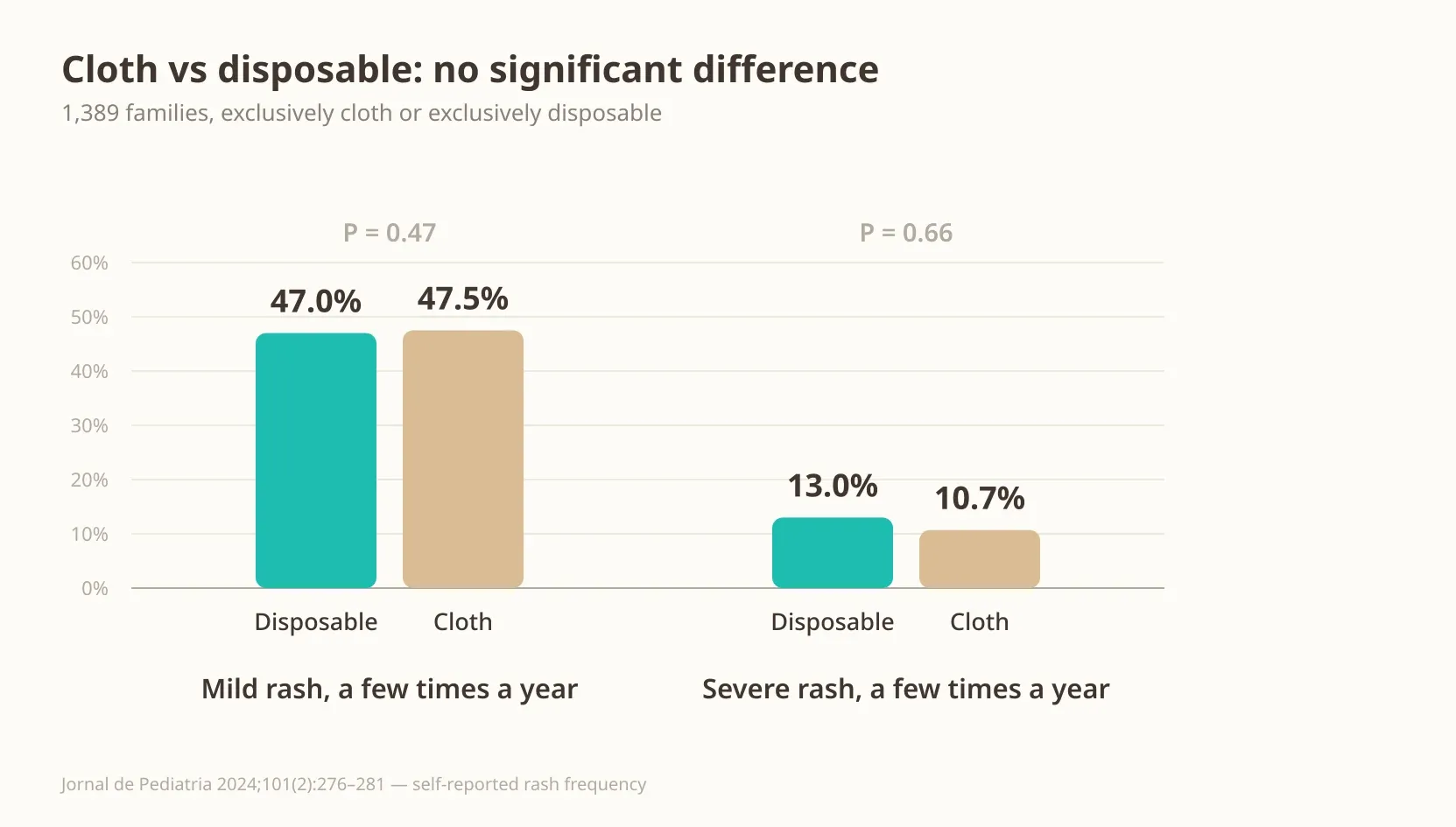
That is not a verdict that cloth is fine. A different study, in 1,153 Thai children where 59.6% used cloth, found a substantially higher risk of diaper dermatitis with cloth — more than five times 5. The authors do note that every disposable brand in their population used modern absorbent gel technology 5.
The honest summary: the question has never been settled by good trials, the two best recent studies disagree, and anyone telling you the answer with confidence is not describing the evidence.
“Petroleum jelly prevents rash”
A randomised trial in 426 neonates found no significant reduction in rash frequency or intensity from petroleum jelly 8. Meanwhile, in a 96-infant randomised trial comparing two antifungal pastes, clotrimazole was more effective than zinc oxide paste 8. Barrier products are not interchangeable, and the evidence for any specific one is thinner than the shelf space suggests. One 2026 review of barrier preparations notes that product selection is often driven more by marketing claims than by actual efficacy 8.
“Vitamin A cream helps”
Cochrane found no studies at all on vitamin A for treating napkin dermatitis. For prevention, there was one trial of 114 newborn infants, which reported no significant differences between groups in severity or duration 11.
Talcum powder
Talcum powder is traditional, drying, and — in the data — associated with more rash, not less. In the 1,153-child study, topical baby powder was an independent risk factor compared with diaper cream — roughly 1.6 times the risk 5. Only 13.6% of that population used an effective diaper cream at all 5. The authors also flag a risk that has nothing to do with the skin. The most serious reported side effect of baby talc is breathing difficulty after accidentally inhaling a large amount. Long-term inhalation has also been linked to lung damage 5.
The FDA’s position on talc is more measured than the headlines. Published literature since the 1960s has suggested a possible association between genital talc use and ovarian cancer, but those studies have not conclusively demonstrated a link, and more research is needed. The separate concern is contamination: talc and asbestos occur in close proximity in the ground, and asbestos is a known carcinogen when inhaled 12. For a product applied to an infant’s bottom, neither the inhalation route nor the contamination question is worth the marginal benefit.
“Wipes damage newborn skin”
The trial evidence here points the other way, and it is worth reading carefully because it contradicts national guidance.
A randomised trial set out to test whether the two methods were equivalent. The person assessing the babies did not know which method each one had been assigned. The trial gave 280 healthy term newborns either an alcohol-free baby wipe, or cotton wool and water. The two groups scored the same on skin hydration. There were also no differences in how much water the skin lost, its surface pH, or its redness 9.
The finding that surprised people is the last one: mothers reported more nappy rash in the water group (P = 0.025) 9.
Two caveats belong with that result. The trial used a specific wipe formulation, supplied by its manufacturer, so it tested that product rather than wipes in general. And the NHS neonatal guideline still advises against baby wipes on the grounds that most contain preservatives and alcohol, accepting water wipes as an alternative 3. The reasonable reading: water and cotton wool remains the safe default for a newborn. But a parent using a fragrance-free, alcohol-free wipe is not causing harm — and the “wipes are the problem” framing is not supported.
The routine, in order
- Change as soon as you notice, day or night. Night changes matter more than the data first suggest 5.
- Clean gently. Water and a soft cloth, or an alcohol- and fragrance-free wipe. A squirt bottle if the skin is raw 6.
- Air-dry, then dry the creases carefully 610.
- Apply zinc oxide barrier thickly — frosting, not lotion. Do not rub it in fully 6.
- Do not scrub the barrier off at every change. Remove it fully once at the end of the day 6.
- Look at the rest of the body before deciding this is ordinary diaper rash 1.
When to call the doctor
The AAD lists the signs of skin infection: fever, blisters, pus draining from the rash, and a rash that does not go away after treatment or worsens. Another sign is a baby who is in pain or hard to console 6.
The NHS neonatal guideline adds an escalation timeline: if there is no improvement in 48 to 72 hours, or rapid deterioration, contact the appropriate specialist 3.
Two specific presentations deserve a call rather than another cream:
- Satellite pustules at the rash margin, or a rash extending into the skin folds — likely candida, which needs an antifungal. The NHS pathway is clotrimazole 1% three times daily for up to three weeks, continued even after symptoms resolve, and explicitly not combined with a non-sting barrier film 3.
- A rash plus lesions anywhere else, plus diarrhoea or hair loss — the zinc-deficiency pattern 1.
Frequently asked questions
Can I use a barrier cream at every change if there is no rash?
Yes, and the NHS guideline describes exactly that for normal skin: a thin layer of yellow soft paraffin applied very thinly as prevention 3. The caveat is that prevention ointments did not show a clear benefit in every trial — in the 1,389-family study, ointment use was not a significant predictor of rash 2.
Is it true that I should not use a steroid cream?
Topical steroids are not a routine diaper-rash treatment. They have a specific role in some inflammatory conditions, and the NHS pathway warns that a non-sting barrier preparation should not be used when candida is present 3. If a rash is not responding to barrier cream and frequent changes, the answer is a diagnosis, not a stronger tube from the cabinet.
My baby’s rash appeared after starting solids. Why?
Diet changes stool consistency and frequency, and stool is the irritant. The 300-case study documented the reverse pattern too — gastrointestinal symptoms often preceded the skin signs, with 22% of patients presenting with a gastrointestinal problem first 1. If you have recently started solids, see our guide to starting solids at 6 months.
Can antibiotics cause diaper rash?
Antibiotic therapy is listed among the contributing factors for napkin-associated dermatitis 3, and candidal dermatitis is the most common infection in the diaper area 3. If a rash with satellite lesions appears during or after a course of antibiotics, that combination is worth mentioning to your doctor.
Should I stop using cloth nappies?
Not on the strength of the current evidence. Cochrane could not pool the studies at all because of methodological flaws 4, and the largest recent comparison found no difference 2. One neonatal guideline advises against reusable nappies in cases of moderate-to-severe dermatitis specifically 3, which is a narrower and better-supported rule.
Does my baby need to go nappy-free?
Air time is a reasonable measure and both the AAD and the NHS guideline mention leaving the area exposed where age and condition allow 63. It is not a substitute for the things with stronger support: frequent changes, a thick barrier, and correct diagnosis.
The short version
Diaper rash is a location, not a diagnosis. Roughly six in ten rashes in the diaper area turn out to be something else — either a rash the diaper made worse, or a rash with nothing to do with diapers at all 1. Change nappies promptly, including at night; clean gently; dry the creases; apply zinc oxide thickly and leave it on; and look at the rest of your baby’s body before you decide what you are treating.
The two findings that should change your behaviour are visual. Satellite pustules mean candida. Folds involved mean infection. Either one sends you to a clinician rather than back to the cream.
And on the two questions parents argue about most: the cloth-versus-disposable evidence is genuinely unsettled, and the wipes-versus-water trial found wipes equivalent — with more reported rash in the water group 429. Confidence on either topic is not warranted.
Because the useful variable is frequency, not severity, the app you already use to log feeds and nappies is the right place to record this. Logging a rash episode with the nappy changes around it turns “she’s been rashy for a while” into a dated pattern a paediatrician can read. Note when it started, where it is (convex surfaces versus folds), whether there were satellite spots, and what was on the skin beforehand — new food, antibiotics, diarrhoea. Shared through the family code, that record follows the baby at handover instead of being reconstructed from memory. If you want the wider picture of what is worth recording, see tracking without data anxiety and what to track in your baby’s first year.
Disclaimer: This article is for informational purposes only and does not constitute medical advice. Always consult your paediatrician about your baby’s skin, and seek same-day care for a rapidly spreading rash, blistering, fever, or a baby who is in pain or hard to console.
Footnotes
-
Lebsing S, Chaiyarit J, Techasatian L. “Diaper rashes can indicate systemic conditions other than diaper dermatitis,” BMC Dermatology, 2020;20:7. (Prospective descriptive study of 300 consecutive patients with rashes in the diaper area, tertiary paediatric department, Oct 2016 – Nov 2019. Irritant diaper dermatitis 41.67%; rashes exacerbated by the diaper 33.67%; eruptions present regardless of the diaper 24.67%. Concurrent lesions at other sites: 77.03% vs 0.80%, P < 0.001.) Source ↩ ↩2 ↩3 ↩4 ↩5 ↩6 ↩7 ↩8 ↩9 ↩10 ↩11 ↩12 ↩13 ↩14 ↩15 ↩16 ↩17 ↩18 ↩19 ↩20 ↩21 ↩22 ↩23 ↩24 ↩25 ↩26
-
Uber M, Imoto RR, Carvalho VO. “Cloth versus disposable diapers: an exploratory study on family habits,” Jornal de Pediatria, 2024;101(2):276–281. (1,389 participants; mild rash 47.0% disposable vs 47.5% cloth, P = 0.47; severe rash 13% vs 10.7%, P = 0.66; barrier ointment use 68% vs 26.3%.) Source ↩ ↩2 ↩3 ↩4 ↩5 ↩6 ↩7 ↩8 ↩9
-
NHS Greater Glasgow & Clyde, “Napkin care guidelines, neonates,” Paediatric Clinical Guidelines, last reviewed Jul. 2019. Source ↩ ↩2 ↩3 ↩4 ↩5 ↩6 ↩7 ↩8 ↩9 ↩10 ↩11 ↩12 ↩13 ↩14 ↩15 ↩16 ↩17 ↩18 ↩19
-
Baer EL, Davies MW, Easterbrook K. “Disposable nappies for preventing napkin dermatitis in infants,” Cochrane Database of Systematic Reviews, 2006, Issue 3, Art. No. CD004262. Source ↩ ↩2 ↩3 ↩4 ↩5
-
Sukhneewat C, Chaiyarit J, Techasatian L. “Diaper dermatitis: a survey of risk factors in Thai children aged under 24 months,” BMC Dermatology, 2019;19:7. (1,153 children; prevalence 36.1%; cloth diaper OR 5.47, 95% CI 3.78–7.92; fewer than three night changes OR 3.72, 95% CI 2.04–6.76; baby powder OR 1.61, 95% CI 1.04–2.57, P = 0.005.) Source ↩ ↩2 ↩3 ↩4 ↩5 ↩6 ↩7 ↩8 ↩9
-
American Academy of Dermatology, “How to treat diaper rash.” Source ↩ ↩2 ↩3 ↩4 ↩5 ↩6 ↩7 ↩8 ↩9 ↩10 ↩11
-
American Academy of Pediatrics (HealthyChildren.org), “Common Diaper Rashes & Treatments,” by Ingrid Polcari, MD, FAAP, updated Dec. 2024. Source ↩
-
Alkhamis ZZ, Bhagchandani M, Idris M, et al. “Clinical Effectiveness of Barrier Preparations in the Management of Diaper Dermatitis: A Systematic Review and Meta-Analysis,” Cureus, 2026;18(1):e102379. (Prevalence figures and peak age as reported in this review; individual trial findings attributed to Alonso et al. 2013, 426 neonates, petroleum jelly; and Hoeger et al. 2010, 96 infants, clotrimazole vs zinc oxide paste.) Source ↩ ↩2 ↩3 ↩4 ↩5 ↩6
-
Lavender T, Furber C, Campbell M, et al. “Effect on skin hydration of using baby wipes to clean the napkin area of newborn babies: assessor-blinded randomised controlled equivalence trial,” BMC Pediatrics, 2012;12:59. Source ↩ ↩2 ↩3 ↩4
-
NHS, “Washing and bathing your baby,” reviewed Aug. 2025. Source ↩ ↩2
-
Davies MW, Dore AJ, Perissinotto KL. “Topical vitamin A, or its derivatives, for treating and preventing napkin dermatitis in infants,” Cochrane Database of Systematic Reviews, 2005, Issue 4, Art. No. CD004300. Source ↩
-
U.S. Food and Drug Administration, “Talc,” updated Jan. 2026. Source ↩