

Why Does Teething Hurt More at Night? Causes and Nighttime Relief
By Simple Baby Tracker Editorial TeamBaby Care
Why does teething hurt more at night? Three reasons nights feel worse — low cortisol, no distractions, lying flat — plus a step-by-step nighttime soothing routine and when to call the doctor.
Key Takeaways
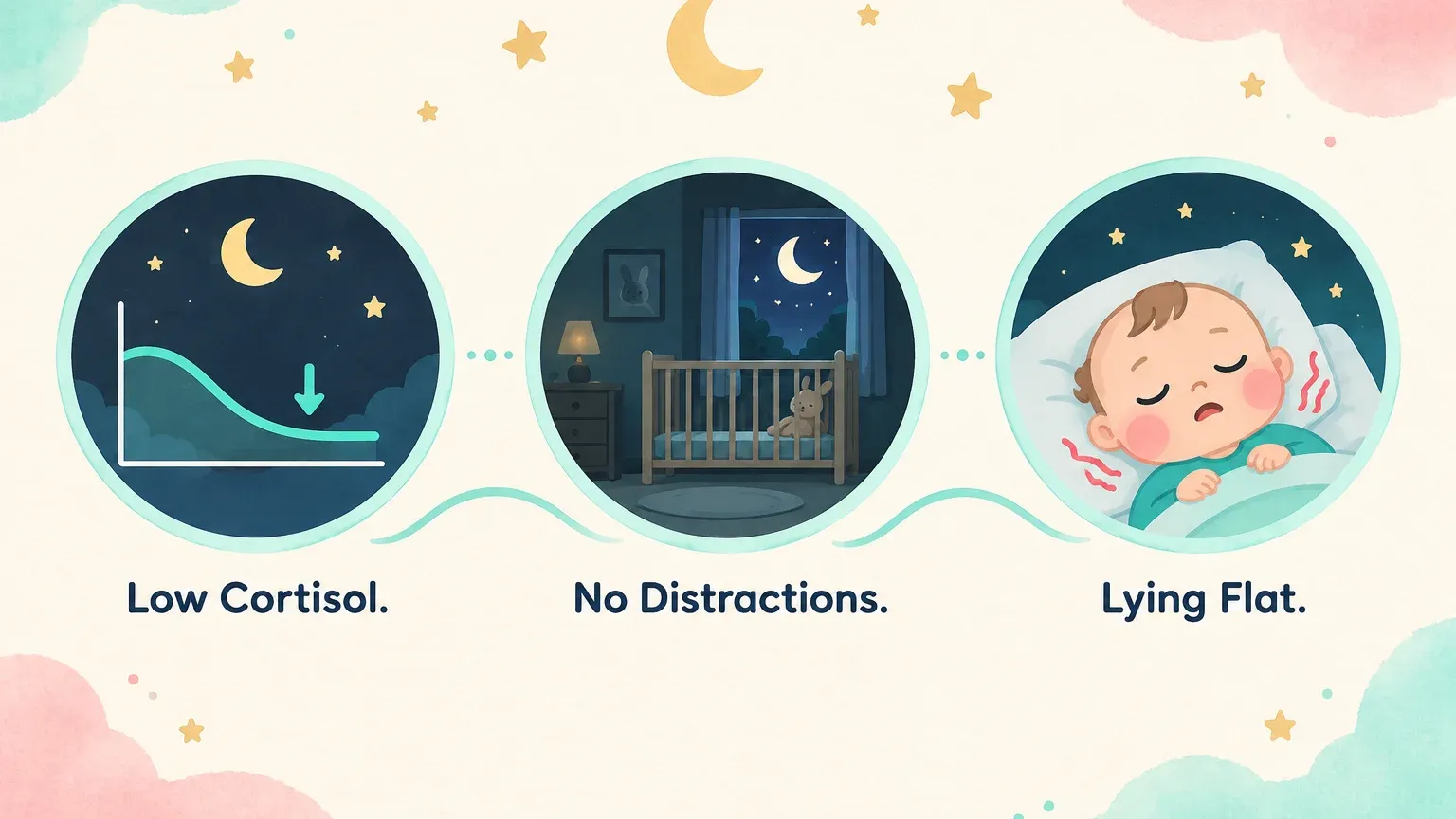
- Why does teething hurt more at night? Three things stack up: the body’s natural anti-inflammatory cortisol dips in the evening, the quiet dark leaves nothing to distract from sore gums, and lying flat increases blood flow and stuffiness around the head 12.
- Teething pain itself does not get stronger after dark — your baby simply feels the same soreness more. Daytime play masks it; nighttime stillness unmasks it.
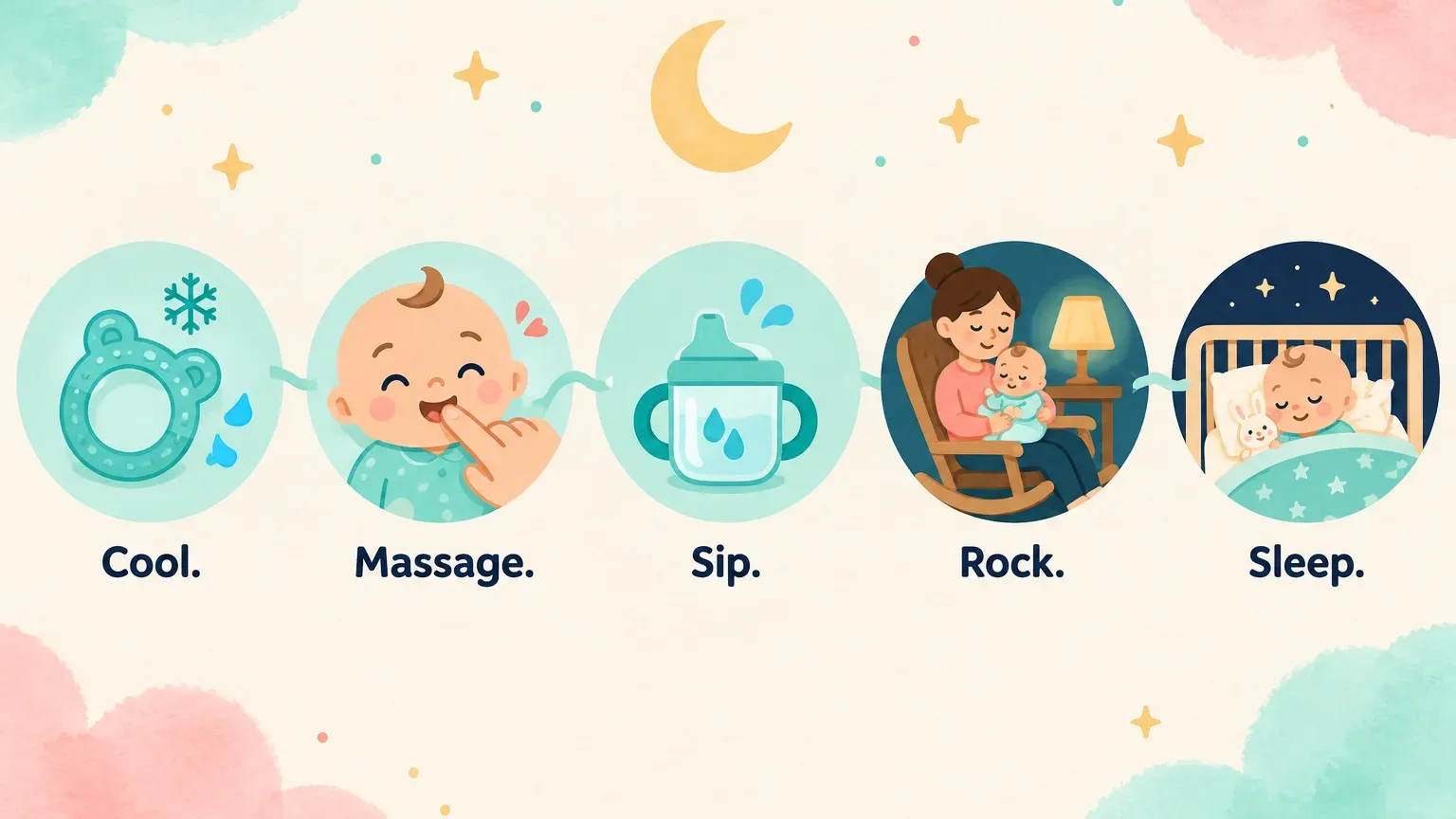
- A calm, repeatable soothing routine (chilled ring, gum massage, comfort feed, dark rocking, back down drowsy) works better than any single trick 34.
- Call the doctor for fever of 100.4°F (38°C) or higher, symptoms lasting well beyond a few days with no tooth, or any fever under 3 months — none of that is teething 56.
Why does teething hurt more at night?
Yes, it really is worse at night — and no, you are not imagining it. The tooth does not suddenly grow faster after bedtime. What changes is your baby’s body and bedroom: the same gum soreness that was background noise at noon becomes the only signal at midnight. Three mechanisms explain it, and each one points to something you can do about it.
3 reasons teething pain feels worse at night
1. Cortisol dips in the evening, so inflammation feels stronger. Cortisol is the body’s built-in anti-inflammatory, and it follows a daily rhythm — high in the morning, low at night. When cortisol drops, inflammatory signals and pain perception rise; this evening pain peak is well documented across pain conditions, from arthritis to headaches 1. Teething soreness is gum inflammation, so it rides the same wave: the ache that was tolerable at 2 PM throbs at 2 AM. There is no teething-specific trial measuring this overnight curve, but the physiology is the same tissue and the same hormones.
2. No distractions left. During the day, toys, faces, sunshine, and snacks compete with sore gums for your baby’s attention. At night the room goes dark and quiet, and pain becomes the only thing to notice — the same reason your own toothache or headache always feels loudest in bed. Overtired babies feel it most: fatigue lowers pain tolerance, and a baby who skipped naps has fewer coping resources at midnight 2.
3. Lying flat increases pressure and stuffiness. Upright during the day, gravity drains blood and mucus downward. Flat in the crib, more blood pools around the head and gums, which can make already-swollen gum tissue throb — the same reason adults with sinus pain or toothaches feel worse lying down 2. A stuffy nose from a concurrent cold gets worse flat too, and mouth-breathing dries the gums; if congestion is part of the picture, see our guide on can teething cause congestion and cough.
One reassurance from the research: teething discomfort clusters in a short window — the day before, the day of, and the day after a tooth breaks through 7. So the brutal nights are finite. Our how-long-does-teething-last guide has the full timeline; if terrible nights run for weeks with no tooth appearing, suspect a sleep regression or illness instead — our teething vs. ear infection vs. cold guide helps tell them apart.
Nighttime soothing routine that actually works
No single trick fixes teething nights. What works is the same short sequence, in the same order, every time — predictability itself is soothing. Run it before bed, and repeat a shortened version at night wakings:
| Step | What to do | Why it helps |
|---|---|---|
| 1. Chilled (not frozen) teether | Offer a cooled teething ring or clean wet washcloth from the fridge for a few minutes | Cold numbs sore gums and reduces swelling; frozen is too harsh for thin gum tissue 3 |
| 2. Gum massage | Rub the swollen ridge firmly with a clean finger for 30–60 seconds | Counter-pressure dulls the ache, like pressing a bumped elbow 3 |
| 3. Comfort feed | Nurse or offer a small bottle/drink of water (age-appropriate) | Sucking soothes, and fluids keep gums moist; avoid sweet drinks that pool on new teeth 4 |
| 4. Dark, calm rocking | Lights low, white noise on, rock or hold upright 5–10 minutes | Upright position eases the lying-flat pressure while baby drifts off 2 |
| 5. Back down drowsy but awake | Lay baby down before fully asleep, same sleep space as bedtime | Waking between sleep cycles in the same place makes resettling far easier |
What to skip: teething gels with benzocaine or lidocaine (the FDA warns against them for infants), amber necklaces (strangulation and choking risk), and aspirin — all flagged by pediatric authorities 45. If your pediatrician has approved infant acetaminophen or ibuprofen (ibuprofen only from 6 months) for a rough night, give it 30 minutes before bed so it peaks during the first long sleep stretch — but medication should be occasional, not nightly routine 5.
Keep the room slightly cool, the nose clear (saline drops plus gentle suction if congested), and the same wake-up response every time. Log the nights while you wait: bedtime, wake times, temperature, feeds, and any visible tooth bumps. “Woke 3x, 99.1°F, lower gum bump felt this morning, settled with rocking” tells your pediatrician far more than “bad night again” — and check our baby teething chart to see which tooth is likely arriving.
When it is not teething: the red lines
Night pain plus any of these means illness, not teeth — whatever the gums look like:
- Fever of 100.4°F (38°C) or higher, rectal — teething does not cause true fever 6.
- Any fever in a baby under 3 months — call the same day 5.
- Miserable nights for a week or more with no tooth appearing — tortured gums produce a tooth within days; endless suffering without eruption points elsewhere 7.
- Ear pulling with fever, thick colored nasal discharge, vomiting, watery diarrhea, or fewer than 6 wet diapers a day — classic illness signs; get evaluated 6.
- You are simply worried — a same-day call costs nothing 5.
Frequently asked questions
Why is teething worse at night for toddlers too?
Same three reasons — low evening cortisol, no distractions, lying flat — plus a toddler’s longer memory: they anticipate the pain at bedtime and protest earlier. The routine above still applies; add a comfort object and one extra story to break the dread association.
Does teething hurt more when lying down?
It can feel that way. Lying flat increases blood flow around the head and any stuffiness, which makes swollen gums throb more than when upright 2. Holding baby upright for the final wind-down before laying down helps.
Should I give pain reliever every night while teething?
No. Occasional use of pediatrician-approved infant pain reliever on the worst nights is reasonable; nightly use for days on end masks symptoms that deserve evaluation 5. If every night needs medication, call your pediatrician.
How many bad nights does one tooth cause?
A few — night waking clusters in the same short window as daytime fussiness: roughly the day before, the day of, and the day after breakthrough 7. A full week of worsening nights with no tooth is not teething alone.
My baby only cries at night but is happy all day — is that teething?
Possibly, if a tooth bump is visible and the phase lasts only a few days. Daytime distraction genuinely masks mild soreness. But if nights stay bad beyond a few days, or any red-line symptom appears, treat it as illness until proven otherwise 6.
Disclaimer: This article is for informational purposes only and does not constitute medical advice. Every baby is different. Always consult your pediatrician with questions about your baby’s pain, fever, symptoms, or health.
Footnotes
-
Arthritis Foundation, “Perfect Timing: Circadian Rhythms, Your Health and Your Arthritis” — cortisol peaks in the morning and dips at night, when inflammatory pain rises. Source ↩ ↩2
-
Advanced Spine and Pain Center, “Does Pain Get Worse at Night? Causes & Relief Tips” (2026) — nighttime cortisol drop, loss of daytime distraction, and lying-flat blood pooling as pain amplifiers. Source ↩ ↩2 ↩3 ↩4 ↩5
-
Mayo Clinic, “Teething: Tips for soothing sore gums.” Source ↩ ↩2 ↩3
-
Johns Hopkins Medicine, “What You Should Know about Babies Teething.” Source ↩ ↩2 ↩3
-
American Academy of Pediatrics (HealthyChildren.org), “Fever: When to Call the Pediatrician.” Source ↩ ↩2 ↩3 ↩4 ↩5 ↩6
-
American Academy of Pediatrics (HealthyChildren.org), “Teething” (KidsDoc Symptom Checker) — teething does not cause fever. Source ↩ ↩2 ↩3 ↩4
-
Macknin ML, Piedmonte M, Jacobs J, Skibinski C, “Symptoms associated with infant teething: a prospective study,” Pediatrics 2000;105(4):747-752. Source ↩ ↩2 ↩3
Keep reading