

Contact Naps: Are They OK, Safe Sleep Rules, and How to Transition
By Simple Baby Tracker Editorial TeamBaby Care
Your baby only naps on you? Why contact naps happen, the safe-sleep rules that make them safe (awake adult, no sofa), and a gentle step-by-step plan for moving naps to the crib.
Key Takeaways
- Contact naps — your baby sleeping on your chest or in your arms — are normal, especially in the first months. You cannot spoil a young baby with attention 1.
- A contact nap is safe while you stay awake. If you might fall asleep, put your baby on their back in a bare crib or bassinet first 23.
- Never doze off with your baby on a sofa or armchair. The risks are up to 67 times higher when sleeping with a baby on a couch, armchair, or cushion 4.
- Newborns sleep 16 to 17 hours a day in 1- to 2-hour stretches and have no regular sleep cycles until about 6 months — which is why crib naps often fail early on 5.
- To transition, convert one nap a day to the crib, put your baby down drowsy but awake, and keep the routine identical each time 67.
Your baby sleeps beautifully — as long as they are on you. The moment you lower them into the crib, eyes snap open. So you sit there, one arm going numb, wondering: is this OK? Am I creating a bad habit?
Short answer: contact naps are normal and fine, as long as you follow a few safety rules. This post explains why newborns nap best on a warm chest, where the safety line sits, and how to move naps to the crib.
For the background numbers (how much babies sleep at each age), see our baby sleep schedule by age. For what happens when sleep cycles mature around month four, see the 4-month sleep regression.
Why contact naps happen
A contact nap is a nap where your baby sleeps on you — on your chest, in your arms, or in a carrier — instead of on a flat surface. Newborns are built to prefer this.
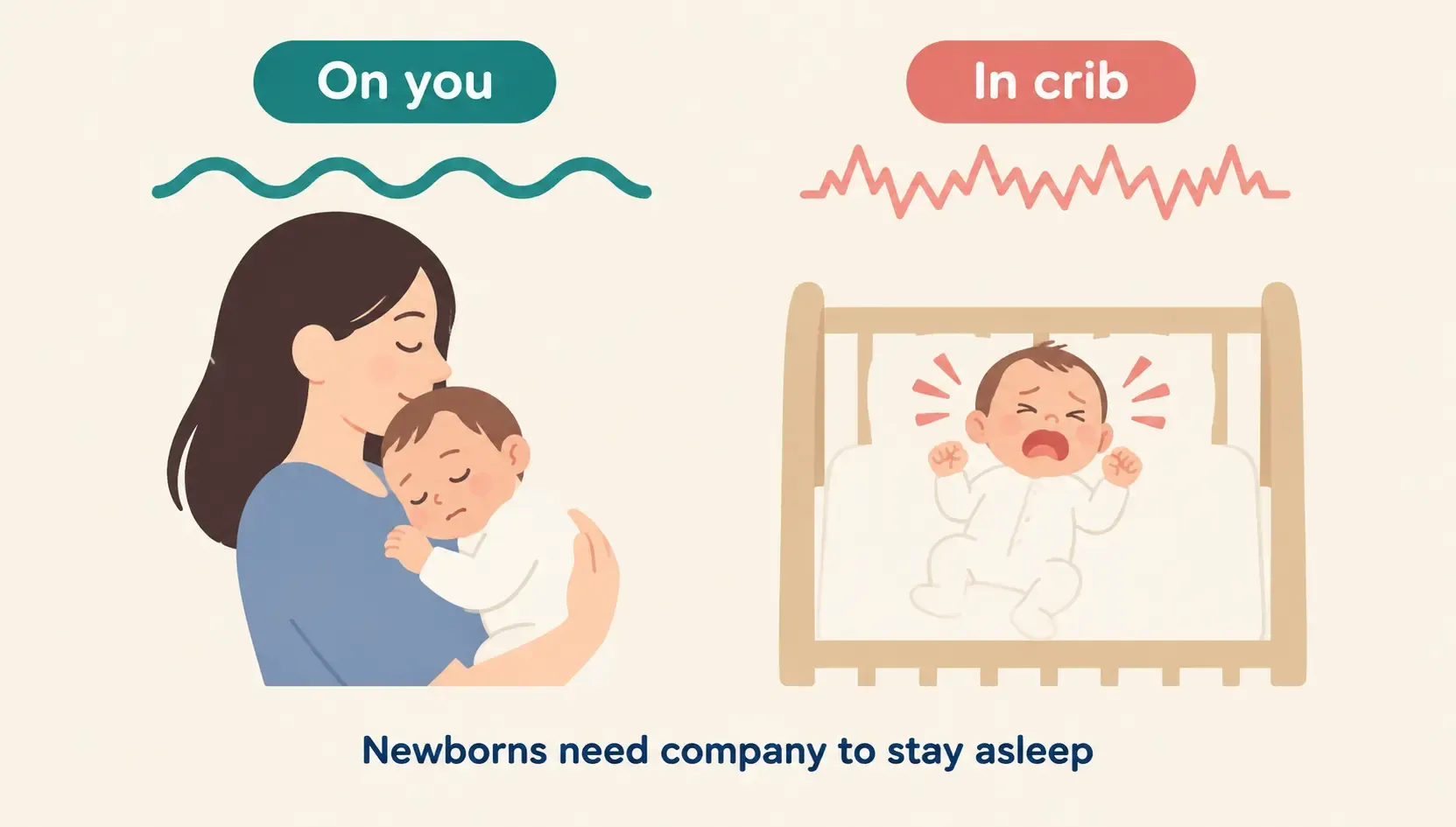
First, newborn sleep is short and light. Newborns sleep about 16 to 17 hours a day, but rarely more than 1 to 2 hours at a time 5. On your chest, your warmth, smell, heartbeat, and movement smooth over the light patches between sleep cycles. In a still, cool crib, the same light patch becomes a full wake-up.
Second, babies do not have regular sleep cycles until about 6 months of age 5. “Regular sleep cycles” just means predictable patterns of deep and light sleep. Before that, sleep is choppy by design — a two-month-old can sleep two hours on you and twenty minutes in a crib, and both are normal.
Third, newborns wake often because they need to eat. Babies wake to feed every 2 to 3 hours, which is normal and healthy 8. A baby sleeping on you can stir, feed, and settle again without fully waking.
So when your baby only naps on you, nothing is broken. It is newborn biology working as intended.
Will contact naps spoil my baby?
No. The AAP advises responding promptly to crying during the first few months, and states directly that you cannot spoil a young baby with attention 1. Holding your baby for naps teaches them that comfort comes when they need it — that is security, not spoiling.
Stanford’s paediatric guidance adds that babies who feel secure handle separations better, especially at night, and that cuddling and comforting your baby during the day helps them feel secure 9. Contact naps are part of that daytime comfort.
One honest caveat: if a baby always falls asleep in arms, they may begin to expect it, and then struggle to fall back asleep on their own when they surface briefly between sleep cycles 6. That is not damage — it is a habit, and habits can be changed gently. The transition plan below is exactly that.
Are contact naps safe? The rules
The key distinction: who is asleep matters more than where the baby sleeps.
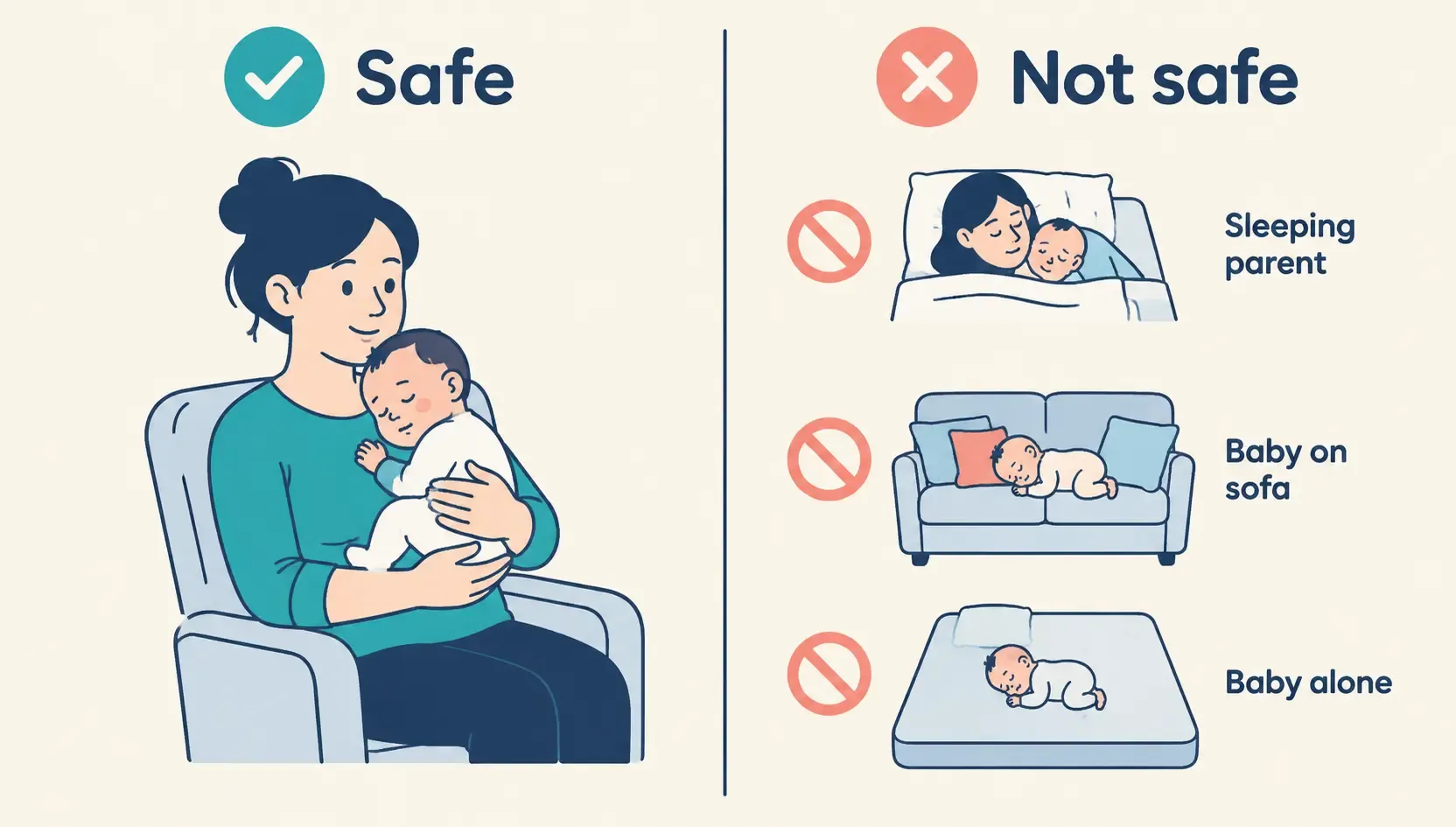
- Baby asleep + you awake and alert = fine. Enjoy the nap.
- Baby asleep + you asleep too = unsafe, unless the baby is alone, on their back, in a bare crib. An adult who falls asleep holding a baby can shift or cover the baby’s face without knowing — and young babies often cannot lift their heads to pull away from something blocking their breathing 10.
The stakes are real. In 2024, about 3,400 babies died suddenly and unexpectedly in the United States, often during sleep or in the baby’s sleep area 11. SIDS — the sudden, unexplained death of an apparently healthy baby under 12 months — is rare, but it still happens 12.
The AAP’s 2022 guidance “cannot support bed-sharing under any circumstances,” because sharing a sleep surface with a baby clearly raises the risk of injury or death 4. Some situations raise it enormously: sleeping with a baby on a couch, armchair, or cushion carries risks up to 67 times higher, and sleeping with someone impaired by fatigue, alcohol, sedating medicines, or drugs — or who smokes — carries 10 times the risk 4. The risk is also 5 to 10 times higher when the baby is under 4 months old, is with someone other than a parent, or was born preterm or low birth weight 13.
The do / don’t list
Do:
- Stay awake. Only hold a sleeping baby while you are awake and alert. Heavy eyelids are the signal to put the baby down 2.
- Set up the crib nearby before a contact nap, so a transfer is easy the moment you feel drowsy 2.
- If you doze off by accident, move the baby back to their own sleep space as soon as you wake up 2.
- Share the room, not the bed. Keep the baby’s crib or bassinet in your room for at least the first 6 months — room sharing lowers risk and makes feeding and comforting easier 14.
- Keep every crib sleep the same: baby on their back, on a firm flat surface, with nothing but a fitted sheet — no pillows, blankets, bumpers, or toys 3. The US Consumer Product Safety Commission sums it up as “Bare is Best” 10.
- Offer a pacifier at nap time once feeding is going well — research links it to lower SIDS risk 15.
Don’t:
- Never fall asleep with your baby on a sofa or armchair. Couches and armchairs are never safe places for babies to sleep, alone or with you 16.
- Don’t share sleep after drinking (the NHS flags even 2 or more units of alcohol), drugs, sleepy-making medicine, or smoking — and don’t bed-share at all if your baby was premature or low birth weight 12.
- Don’t use car seats, swings, carriers, or slings as routine nap spots, especially under 4 months — the slumped position can tip the baby’s chin to their chest and block breathing. Move a sleeping baby to a flat surface as soon as you can 176.
- Don’t swaddle once your baby starts trying to roll (usually around 3 months) — a swaddled baby who rolls onto their tummy can suffocate. A sleep sack keeps them warm instead 1715.
- Don’t let your baby overheat. Dress them lightly for the room, skip hats indoors, and check their chest — sweating or a hot chest means a layer off 15. The NHS suggests a room around 16 to 20°C 12.
One honest note for night feeds: if there is any chance you might fall asleep feeding in bed, clear pillows, blankets, and loose sheets from your side first — then move the baby back to their own space when you wake 16.
When it’s fine vs. when to change something
Keep going if: your baby is under 4 months old, you stay awake for contact naps, nights are going OK, and you don’t mind. One or two contact naps a day plus crib naps for the rest is a perfectly good system.
Consider starting the transition if: your baby is past 4 to 6 months and still only sleeps on you, you get no break, or a carer or daycare needs the baby to nap in a cot. None of these is an emergency — just signs the system costs more than it gives.
Talk to your paediatrician if anything seems off beyond habits: loud snoring, gasping or breathing pauses, extreme sleepiness that interferes with feeding, or sleep that suddenly worsens with signs of illness 6.
The step-by-step transition plan: from chest to crib
Go gradually over a few weeks. The goal is a baby who increasingly falls asleep on a flat surface, one nap at a time.
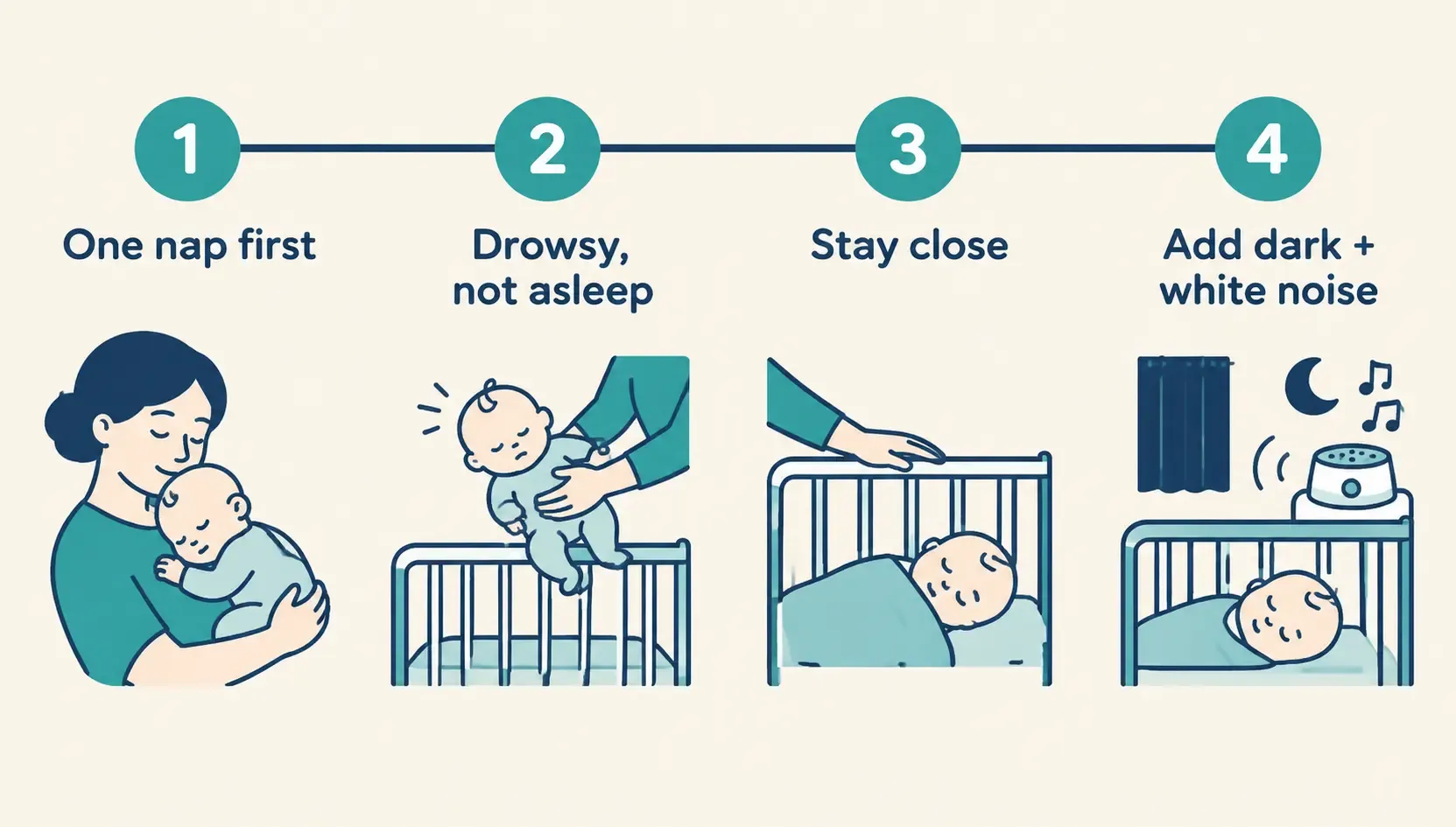
Step 1: Pick the easiest nap. Start with the first nap of the day, when the tiredness that builds while a baby is awake (sleep pressure) is highest. Keep the other naps as contact naps. One crib nap a day is a win.
Step 2: Run the same short routine every time. Curtains closed, white noise on, a quick cuddle or song, then down. The same steps in the same order teach the baby what comes next 6.
Step 3: Put them down drowsy but awake. Watch for sleepy cues — yawning, rubbing eyes, staring off, quieting down 6. Cleveland Clinic’s guide gives rough windows: 1 to 2 hours awake at 1 to 3 months, 1.25 to 2.5 hours at 3 to 4 months, 2 to 4 hours at 5 to 7 months 7. Most babies can start learning to settle themselves from around 3 months 7.
Step 4: Transfer deep, or settle in the crib. Either wait 15 to 20 minutes until sleep is deep (limp limbs, still face), then lower the baby bum-first with a hand resting on their chest — or put them down drowsy and pat and shush in the crib 6. If crying escalates, pick them up and try tomorrow.
Step 5: Add the next crib nap only when the first works most days. The last nap of the day is usually the stubborn one — many families keep it as a contact nap longest, and that is fine.
Step 6: Keep it consistent. Same room, same white noise, same darkness for crib naps and bedtime. Consistency turns a new pattern into an expectation 6.
Skip any wedges, positioners, or inclined sleepers marketed to “help” the transition — they have not been shown to prevent SIDS and have in rare cases caused deaths 610.
Troubleshooting
“My baby wakes the second I put them down.” Wait until deep sleep before transferring, lower bum-first, and keep a hand on their chest with soft shushing for a full minute. Warm the sheet with your hand first. After three failed tries, take the contact nap without guilt — overtired babies sleep worse, not better.
“Crib naps are 30 minutes; contact naps are 2 hours.” Normal. Nothing smooths the baby through light-sleep patches in a crib 5. Try 10 to 15 minutes of patting when they stir at the 30-minute mark. Short crib naps lengthen with practice — watch the trend, not one day.
“Daycare says the baby won’t nap in a cot.” Send your routine in writing — same song, same sleep sack, same white noise — and ask for one cot attempt a day with holding for the rest. Our caregiver handoff guide covers transferring the full plan. Most babies accept new-place rules within a week or two.
“I keep falling asleep during contact naps.” Treat this as urgent — for safety, not habits. Switch today: contact naps only with another awake adult present, or all naps in the crib even if short. If night feeds are the danger point, talk to your paediatrician — waking that never improves deserves a professional look, especially around the 4-month sleep regression.
How logging contact-vs-crib naps shows progress
Progress is invisible day to day and obvious month to month — perfect for a log. Each nap, note where it happened (arms, carrier, crib) and how long it lasted. After a week or two the pattern answers what memory can’t: is the morning crib nap getting longer? Are contact naps down from four to one?
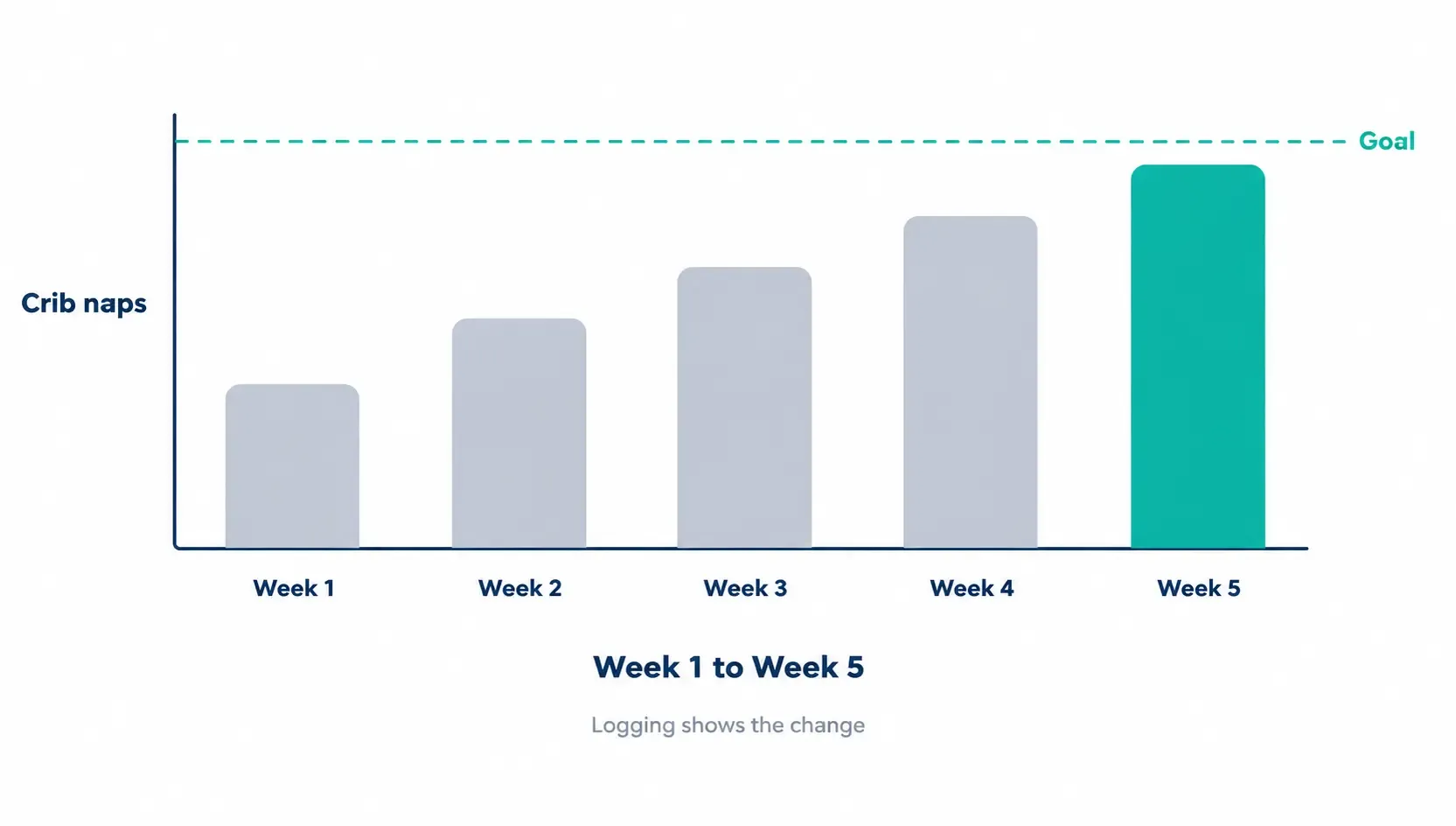
That is the kind of low-effort record a sleep log without the anxiety spiral is for — a few taps per nap, no scoring, just the timeline. And when the transition works, the log becomes proof: the crib column filling up, one nap at a time.
Frequently asked questions
Are contact naps safe for newborns?
Yes, while you stay awake. It becomes unsafe the moment you fall asleep holding the baby — so if you feel drowsy, move them to their back in a bare crib or bassinet 23.
How long can contact naps continue?
As long as they work for your family. They are most common in the first 3 to 4 months and many families keep one a day far longer 5. Start transitioning when the arrangement stops working for you — not by a deadline.
Will contact naps ruin night sleep?
Not by themselves. But a baby who can only fall asleep in arms may call for arms at every brief waking between sleep cycles at night 6. One crib nap a day teaches settling skills that transfer to nights.
Can I mix contact and crib naps in one day?
Absolutely — that is the recommended strategy. Convert the morning nap first, keep the rest as contact naps, then convert the others one by one 6.
What if my baby screams when put down?
Check hunger, wetness, temperature, overtiredness, or undertiredness first 7. Try patting in the crib before picking up 6. If crying escalates, pick them up and try again tomorrow — progress over weeks counts.
Are carrier naps safe?
While you are awake and moving, with the airway visible — chin off the chest, face uncovered — yes. But carriers are not routine sleep spaces, and never feed a baby in a sling; take them out first 1712. Move a sleeping baby to a flat surface when you can 6.
When do I stop swaddling?
When your baby shows signs of trying to roll, usually around 3 months — regardless of naps 17. Switch to a sleep sack 15.
When should I call the paediatrician?
If sleep suddenly worsens with illness signs, you hear snoring, gasping, or breathing pauses, sleepiness interferes with feeding, or frequent waking persists for weeks 6. Bring your nap log — real numbers beat tired memory.
Hold your baby as much as you like while you’re awake, guard fiercely against falling asleep together anywhere but a bare crib, and move naps over one at a time when you’re ready. Write down where each nap happens, watch the crib column grow, and compare against the age-by-age totals in our baby sleep schedule. And when someone else holds the nap, make sure the plan survives the handover rather than living in one parent’s head.
Disclaimer: This article is for informational purposes only and does not constitute medical advice. Every baby is different. Always consult your paediatrician with questions about your baby’s sleep, feeding, or health.
Footnotes
-
American Academy of Pediatrics via HealthyChildren.org, “Responding To Your Baby’s Cries” (respond promptly during the first few months; you cannot spoil a young baby with attention). Source ↩ ↩2
-
NIH Safe to Sleep, “Safe Sleep Environment for Baby” (never sleep with baby on an adult bed, couch, or armchair, with or without others; couches and armchairs particularly dangerous when an adult falls asleep feeding or comforting; if you fall asleep in bed, put baby back in their own space on waking). Source ↩ ↩2 ↩3 ↩4 ↩5
-
NIH Safe to Sleep brochure, “Safe Sleep for Your Baby” (place babies on their backs for naps and at night; firm, flat, level surface covered only by a fitted sheet; sleep area clear of objects, toys, and other items). Source ↩ ↩2 ↩3
-
AAP Task Force on Sudden Infant Death Syndrome, “Sleep-Related Infant Deaths: Updated 2022 Recommendations,” press summary (flat noninclined surface; AAP cannot support bed-sharing under any circumstances; couch/armchair/cushion risk up to 67x; impairment by fatigue, alcohol, sedating medicines, drugs, or smoking 10x). Source ↩ ↩2 ↩3
-
Stanford Medicine Children’s Health, “Infant Sleep” (newborns sleep 16–17 hours per day in 1–2 hour stretches; babies don’t have regular sleep cycles until about 6 months; 4–12 months need 12–16 hours per 24 hours). Source ↩ ↩2 ↩3 ↩4 ↩5
-
Stanford Medicine Children’s Health, “Infant Sleep” (falling asleep in arms may become an expected pattern; put baby down drowsy but awake; sleep-readiness signs — rubbing eyes, yawning, looking away, fussing; comfort night wakings with patting without taking baby out of bed; move baby from sitting devices to a flat surface; wedges and positioners not shown to prevent SIDS; call the doctor for new persistent sleep trouble or illness). Source ↩ ↩2 ↩3 ↩4 ↩5 ↩6 ↩7 ↩8 ↩9 ↩10 ↩11 ↩12 ↩13 ↩14
-
Cleveland Clinic, “What Are Baby Wake Windows? And How Long Should They Be?” (1–3 months 1–2 hours; 3–4 months 1.25–2.5 hours; 5–7 months 2–4 hours; put baby down sleepy but awake; most babies can start learning self-soothing from around 3 months). Source ↩ ↩2 ↩3 ↩4
-
AAP Task Force on Sudden Infant Death Syndrome, “Sleep-Related Infant Deaths: Updated 2022 Recommendations,” press summary (“babies have to wake to feed every 2–3 hours, so this is normal and healthy”). Source ↩
-
Stanford Medicine Children’s Health, “Infant Sleep” (babies who feel secure handle separations better, especially at night; cuddling and comforting your baby during the day helps them feel secure). Source ↩
-
U.S. Consumer Product Safety Commission, “Safe Sleep – Cribs and Infant Products” (“Bare is Best” — nothing but a fitted sheet; always place baby on back; move baby to a crib, bassinet, play yard, or bedside sleeper if they fall asleep elsewhere; inclined products over 10 degrees never for infant sleep; young babies cannot lift their heads away from soft suffocation risks). Source ↩ ↩2 ↩3
-
CDC, “About SUID and SIDS” (in 2024, about 3,400 babies died suddenly and unexpectedly in the United States; deaths often happen during sleep or in the baby’s sleep area). Source ↩
-
NHS, “Sudden infant death syndrome (SIDS)” (SIDS is the sudden unexplained death of an apparently healthy baby up to 12 months; never sleep on a sofa or armchair with baby; keep room 16–20°C; no bed-sharing if premature, low birth weight, smoking, 2+ units of alcohol, drugs, or drowsy medicine; take baby out of a sling to feed). Source ↩ ↩2 ↩3 ↩4
-
AAP Task Force on Sudden Infant Death Syndrome, “Sleep-Related Infant Deaths: Updated 2022 Recommendations,” press summary (risk 5–10x when baby is under 4 months, shares with a non-parent, or was preterm/low birth weight; room sharing preferably for at least the first 6 months; about 3,500 sleep-related infant deaths a year in the US). Source ↩
-
NIH Safe to Sleep, “Safe Sleep Environment for Baby” (room sharing reduces the risk of SIDS by as much as 50% versus bed sharing or a separate room; keep baby’s sleep space close to your bed for feeding and comforting). Source ↩
-
NIH Safe to Sleep brochure, “Safe Sleep for Your Baby” (offer a pacifier for naps once feeding well; stop swaddling once baby starts rolling, usually around 3 months; avoid overheating — no hats indoors, watch for sweating or a hot chest, use a wearable blanket). Source ↩ ↩2 ↩3 ↩4
-
NIH Safe to Sleep brochure, “Safe Sleep for Your Baby” (couches and armchairs never safe for baby sleep; if bringing baby into bed to feed, clear soft items first; the longer bed-sharing lasts, the higher the suffocation risk; share the room, not the bed, for at least the first 6 months). Source ↩ ↩2
-
AAP Task Force on Sudden Infant Death Syndrome, “Sleep-Related Infant Deaths: Updated 2022 Recommendations,” press summary (sitting devices such as car seats, strollers, swings, carriers, and slings not recommended for routine sleep, particularly under 4 months; stop swaddling at signs of rolling, usually 3–4 months). Source ↩ ↩2 ↩3 ↩4